

I’m afraid I’ve set the bar rather high by choosing to talk about Morbillinum [1] because it is a specific product, belonging to the class of nosodes —that is to say, the potentisation of a pathological substance. However, it is impossible to prescribe this category of medicines rationally without having a full understanding of homeopathy; otherwise, one risks reverting to a form of magical thinking, which in this context would involve administering the same substance to treat the same condition.
Introduction
All symptoms
This sort of simplistic view has even been developed into a system known as «sequential therapy», which involves administering a series of potentised vaccines to the patient, on the assumption that these injected substances alone are responsible for all ailments, and that administering the vaccine in a potentised form would magically act like an eraser to «remove» the vaccine from the body, as it were. This fails to recognise the fundamental concept of totalité des symptômes which includes physical constitution, intellectual temperament, aetiology, miasms, suppressions, all probable causes, events, chronic diseases, medicines, immunisations, iatrogenic diseases, traumas and their signs and symptoms, which are reviewed in the order in which they appear (Organon §§ 5, 6, 7, 8). To all this must be added, to complete the totality, the patient’s objective signs and subjective symptoms, as well as the investigation of obstacles to recovery.
Susceptibility
Secondly, these practices misapply the concept of individual susceptibility, a fundamental concept that is completely unknown to conventional medicine, which still believes, for example, that mere contact with a viral particle can make a person ill. When individual susceptibility is innate, we speak of of idiosyncrasy : «Fatty foods make me feel ill», «I can’t stand having my head exposed to the cold», etc. But the overuse of chemical substances – be it sea salt, tobacco, a vaccine, or any allopathic medicine taken daily – will eventually induce a sensitivity to that substance [2]. In this case, the administration of the homeopathically prepared substance—that is to say, the potentised substance—will almost certainly trigger a severe flare-up of symptoms, a reaction from the vital force that will delight the pseudo-homeopath who prescribed it, as they will see it as proof of the patient’s recovery. Some patients will even be delighted to find themselves so affected, believing this to be a sign of the medicine’s curative action. But in reality, all that has happened is nothing more than a violent experiment offering no benefit whatsoever to the patient.
Vaccine
A third point that will not have escaped anyone’s attention is that administering a medicinal product to treat the very same condition is akin to the idea of vaccin. Whether they realise it or not, all doctors who prescribe preventive medication practise homeopathy. It is by exposing a person to a mild form of the disease from which one wishes to protect them – a form of ‘medicinal disease’ – that one immunises them against it. In this case, it is by infecting a healthy man with a mild but smallpox-like condition that he is immunised against that disease.
It all began with the variolation, a common practice within the Greek community of Constantinople in the 18th centurye century, probably imported from Circassia [3], but already known to the Chinese. By exposing very young children to people with smallpox, it was hoped that the impact of the disease would be mitigated, which had a chance to develop in a benign manner. This notion of administering a diluted form of the same disease as a preventive measure is a form – albeit a monstrous one, it must be said – of homeopathy based on the principle of ‘like cures like’. There was roughly a one in fifty chance of dying from it. It was in 1721 that Lady Montagu, wife of the British ambassador to Constantinople, introduced the practice to the upper echelons of British society.[4] Attempts will therefore be made to use variolation to treat measles and even syphilis, [5] by using convicts to carry out experiments. Here we can already see the dubious ethics of the allopathic approach.
On 14 May 1796, Edward Jenner vaccinated — literally «cowpoxed» — James Philips, his gardener’s son, who was then aged 8, by inoculating him with cowpox.[6] And a few weeks later, he variolised him, deliberately exposing him to the wild smallpox virus. Jenner’s questionable ethics were further exacerbated when it came to maintaining the cowpox pustule from person to person: never mind, children from orphanages were used for this purpose. The risk of death fell to around 1 in 200, but for the first time the concept of population and from statistics related. Once politicians become involved with industry, the whole thing turns into a veritable tidal wave of ideology that sweeps everything before it.[7] The term ‘vaccination’ carries profound implications, for whilst these injections are carried out under the pretext of prevention, they are in fact a gradual transformation of humans into submissive, unresponsive livestock, and one that is viewed as such by the authorities — as the Covid affair has shown us.
Right from the start, we can see the seeds of the the totalitarian messianism of conventional medicine : the individual is of no consequence, provided that «science» makes progress — everything must bow to the ideal to be achieved, which is imposed on everyone. In reality, when I say «science», one must also consider the emergence of the first large-scale healthcare industry.[8] After two centuries of fraud [9], coercion and other forms of manipulation that have led to the global glorification of Covid and the crime against humanity constituted by the forced administration of experimental gene therapies; I demand [10] : Can anything good come of allopathic medicine?
Arthur Koestler had already answered this question in Zero and infinity : «There are only two conceptions of human morality, and they lie at opposite poles. One is Christian and humanitarian; it declares the individual to be sacred and asserts that the rules of arithmetic must not be applied to human beings – who, in our equation, represent either zero or infinity. The other conception is based on the fundamental principle that a collective end justifies any means, and not only permits but demands that the individual be, in any case, subordinated and sacrificed to the community – which may dispose of him either as a guinea pig for an experiment or as a lamb offered up in sacrifice.»
It’s time to talk about homeopathy
Now that I’ve pruned it back properly, I need to stitch it back together! But how can I describe such a vast and complex concept in just a few words? Homeopathy can only be called such if its fundamental principles are observed, namely:
1) like cures like,
2) the single dose,
3) the minimum quantity,
4) the potentised remedy.
Like attracts like, energisation, non-physical contagion
If homeopathy —which Hippocrates no doubt had a hunch about— has only ever been practised on a marginal scale since time immemorial, it is because Administering to the patient a substance capable of inducing a state similar to their own causes an absolutely dreadful worsening of their condition. As we have seen above, the patient therefore exhibits a particular affinity, an intense susceptibility to the substance capable of mimicking their condition. Literally, the patient’s entire being and the potential of the medicine attract one another with extraordinary force. This phenomenon defies common sense, as the routine allopathic administration of substances that bear no relation to the patient’s condition does not provoke this sort of reaction, and large and ever-increasing doses must be administered.
It was Hahnemann alone who conceived the idea of diluting the substance through successive dilutions, thereby discovering—through this process of dynamisation—the world we would today call the world of energy. A distinguished chemist, who corresponded with Lavoisier, Hahnemann fully realised that he was discovering a new continent. The Founder writes (note to §249):
«Experience shows that it is almost impossible to dilute the dose of a perfectly homeopathic remedy sufficiently so that it is not enough to bring about a noticeable improvement in the condition for which it is indicated (§160 and §279)»
He goes on to write (§269):
«Homeopathic medicine has developed, for its specific purposes, a completely novel process – one that had never been tried before – which extracts and releases the intangible medicinal properties inherent in raw substances. It is only through this process that these substances acquire medicinal properties and an immeasurably penetrating efficacy, even those which, in their raw state, show not the slightest sign of medicinal action on the human body.».
Homeopathy thus transforms even the most potent poisons into medicines. It brings together the concepts of illness and medicine since the medicine is merely an artificial disease. For example, the potentisation of infectious germs transforms them into a new medicinal substance, corresponding to the signs and symptoms of the disease they cause.
The totality of symptoms and vital force
A homeopathic remedy brings about a dynamic—that is to say, energetic and immaterial—influence, which is perceived by the patient’s vital force because there is a predisposition to perceive this influence.[11] Thus, a toxic substance administered in weight-based doses will poison anyone; the dynamic signal is only detected if it encounters the right conformation in the patient. This is the famous question «Does alcohol make you drunk?», which cannot be answered without considering the two intertwined factors of the quantity of alcohol and the individual’s susceptibility.
These fundamental dynamic concepts — first set out by Hahnemann around 1796! — are still very rarely taught today, and even less widely understood. It is regrettable that few doctors develop their own powers of observation when dealing with their patients — they are even taught that their own perspective is of no value.[12] Yet the concept of the totality of symptoms is self-evident: when a person is ill, whether acutely or chronically, a range of symptoms as it appears to the observer. It consists of:
- Common symptoms of acute illness — ‘acute miasma’ in our jargon
- Common symptoms of active chronic miasma (see below)
- Possibly pathognomonic signs of the disease[13]
- Objective and subjective symptoms specific to the patient — not forgetting the symptoms reported by those close to them, and
- The patient’s characteristic symptoms.[14]
The first question that springs to mind is: What are we to make of a form of medicine that claims the right to treat only a single symptom taken out of this whole? ? This arbitrary approach is consistent with the Taylorisation of an industry, but is diametrically opposed to the scientific principles to which the proponents of modern medicine nevertheless claim to adhere.
The second is more subtle: if such a totality exists and persists as such, then we must attribute to it a fundamental cause that lies beyond the organs. In other words, the presence of a totality of symptoms automatically leads to the notion of a vital force that is energetically disrupted. The signs and symptoms we observe are produced by this energetic imbalance, which is not directly perceptible — illness is the indirect manifestation of an energetic imbalance.[15] Consequence: only a dynamic stimulus can truly cure a condition.
A third question arises here, but it falls outside the scope of this article: if the body «deems» it useful to maintain a specific set of symptoms, what is the overall impact of suppressing one or more of them through an artificial chemical process?
Hostile dynamic inflows
We’ve finally reached the heart of our presentation on Morbillinum! Physics has familiarised us with the concept of wave-particle duality. Depending on the experiment, the same object under observation behaves either as a wave or as a particle — this is the case with light, for example.
Conventional medicine, which is purely materialistic, still regards the pathogen alone as responsible for disease. The work of the late Professor Montagnier, confirming Hahnemann’s discoveries, has demonstrated what we call the dynamic aspect of contagion: thus, a germ is also associated with a dynamic imprint. We call this imprint a «miasma» — a Greek term meaning ‘contamination’.
At the acute level, countless living organisms «vibrate» with their own energetic signature; these are the acute miasms. Montagnier demonstrated that a solution containing germs carries a vibration that can be recorded and re-emitted, making the digital transmission of bacterial DNA possible.[16] It is highly likely, although I cannot prove it, that it is the dynamic impulse that is first felt when one falls ill, and that it is only afterwards that the pathogen develops within the body. This is an elegant way of explaining the concept of the incubation period. It also explains how a potentised dose of Bryonia, for example, is capable of bringing a patient’s temperature back to normal within a few hours, even whilst all the blood cultures were teeming with pneumococci. A whole new dynamic—quantum?—biology needs to be created.
With regard to chronic conditions, Hahnemann demonstrated that all chronic diseases stem from the the transmission to offspring of the energetic imprint of infections that the body is never able to rid itself of. Tuberculosis, syphilis, certain forms of gonorrhoea, and the eradication of scabies are the four known chronic miasms. Not content with revolutionising medicine, Hahnemann thus created the first form of epidemiology in history.
A patient with a family history of tuberculosis, for example, will display marked mental instability, with an aversion to routine and a strong need for change. Physically, they will be thin despite having a very good appetite, and will be prone to allergies and, nowadays, autoimmune disorders. All these symptoms are characteristic of this chronic miasm. In acute cases, a disease that rapidly progresses to a serious stage indicates the activity of a chronic tubercular miasm. Thus, the chronic miasm, attached to the vital force like an energetic parasite, is capable of influencing the course of an acute condition.
As is often the case, the distinction between acute and chronic is purely academic. Thus an acute miasm invading the body may leave a permanent mark on it. This creates an energetic layer which manifests through its own symptoms, and which prevents any progress towards recovery even if the remedy indicated for the full range of symptoms is administered. This is where nosodes come into their own, with Morbillinum at the forefront, as it was not uncommon for severe measles to either cause complications or lead to a chronic condition from which the patient never fully recovered.
The development of nosodes [17]
One of the direct consequences of the publication of *Chronic Diseases* by Hahnemann (1828) was the development of the use of miasms as potentised remedies for the treatment and prevention of diseases. Shortly after the book’s publication, Hering carried out the first proving of Psorinum on himself. The contents of a scabies vesicle was thus the first nosode to be tested.

Constantine Hering
1800-1880
We owe a great deal of the expansion of the homeopathic Materia Medica to Hering. Dudgeon [18] reports that Hering created seven new categories of homeopathic remedies.
- The use of venoms from insects, snakes and other venomous creatures (animal venoms).
- The use of remedies derived from miasms (nosodes).
- The introduction of potentised miasms and pathological secretions taken directly from the patient (auto-nosodes).
- The use of homologous organs, tissues and secretions as remedies (sarcodes).
- The use of products prepared from potentised miasms in the prevention of infectious diseases (homeopathic prophylaxis using nosodes).
- The study of the periodic table and the chemical and nutritional elements present in the human body (biochemical relationships).
- Hering suggested using potentised extracts of weed seeds or seeds from harmful plants to destroy them, and using potentised extracts of animals or insects to eliminate and prevent infestations of these harmful species (public health measures).
One of the key points to bear in mind is the «heroic» nature of nosodes. These are diseases responsible for millions of deaths, and their clinical picture is well known. For this reason, we have a wealth of information at our disposal on such conditions, as they are diseases of common aetiology with similar symptoms that affect large sections of the population. A study of epidemic infectious diseases provides a great deal of information, as they act as a natural experiment for the nosode.
Dr Swan, who had experimented with Medorrhinum, was asked whether it was legitimate to use nosodes that had not been tested in the homeopathic sense of the term. His reply was that the miasms had brought about a proving the natural course of infectious diseases across a very wide range of constitutions. Consequently, miasms are responsible for pathological conditions that are similar to those they cure, including their rarer complications.
For this reason, a remedy such as Morbillinum (the measles nosode) has been known to cure meningitis, lupus erythematosus, conjunctivitis and spontaneous abortions when the symptoms match. All these conditions are similar to the complications caused by the measles miasma in the population.
We prescribe the nosode on the basis of the «natural» experiment of the disease it induces, but they would need to be tested on healthy subjects, in a potentised form, in order to understand their full potential and complete clinical picture. Unfortunately, this has not yet been achieved – not by a long shot!
Hering had observed that certain characteristic symptoms of nosodes were related to their indications. He defined the ‘call symptoms’ of nosodes, which are as follows:
- Has never been quite the same since that infection. Sometimes a person never fully recovers from an acute illness, leading to constitutional symptoms. The effect of this acute miasm remains imprinted on the vital force, forming a layer of «dysregulation» within the defence system. This new, stronger layer suppresses the constitutional pattern and hinders recovery.
- Lack of response to appropriately prescribed treatments: Carefully chosen remedies may not work, may cease to be effective, or may merely alter the symptoms.
- Constant changes in symptoms.
- Fragmentary pictures of constitutional remedies: there are times when there are very few symptoms on which to base a prescription. This situation arises in deficient, paucisymptomatic cases, where a strong miasmatic layer has suppressed the constitution’s ability to manifest symptoms. Apart from signs related to the pathology and miasms, there is little evidence on which to base a constitutional prescription. This condition may be due to a combination of traumas, miasms, suppressions and adverse effects associated with medication.
- Regional miasmatic signs with few characteristic symptoms. The case is so unclear that it boils down solely to local manifestations, with no characteristics that would allow a conventional remedy to be prescribed.
Indications for Morbillinum [19]
I hope I will be forgiven for the above remarks, as they seemed to me essential to understanding what we are doing when we prescribe a nosode. I can no longer stand it when homeopathy is reduced to some form of «alternative medicine» or other nonsense on a par with Madame Soleil’s horoscopes. Whilst homeopathy may finally bring about the long-awaited revolution in medical treatment, it demands rigour of mind, perseverance in one’s work, and intellectual honesty.
Prevention of epidemic measles
Before mass vaccination — I cannot dwell on this barbarity — Morbillinum was an easily prescribed preventative, yielding very good results. Administering it to an entire class prevented the first case from infecting the others. Here, Morbillinum addresses susceptibility to the acute miasm of measles, to which it bears a striking resemblance. Once epidemic susceptibility has been eliminated, the natural disease can no longer affect the vital force. The scope for using nosodes as prophylactics is absolutely vast.
Neurological sequelae or complications of measles
It will be clear to everyone that the drug’s effectiveness is linked to the after-effects of measles, in cases where the acute illness has had such a profound impact on the body that its mark remains.
It may well be the only medicine capable of producing results in the PESS (subacute sclerosing encephalitis). The first symptoms observed in subacute sclerosing encephalitis may include poor academic performance, memory loss, outbursts of anger, dizziness, insomnia and hallucinations. Sudden convulsions of the arm, head or body may occur subsequently. It is a dreadful condition for which there is no known remedy in conventional medicine. The homeopathic literature contains documented cases of recovery using Morbillinum.
The syndrome of Guillain-Barré It is one of the classic complications associated with MMR vaccines, for example; it is an excellent indication for Morbillinum, provided the patient can be admitted to hospital.
The virus’s tendency to target the brain makes Morbillinum the treatment of choice whenever a child suffers from fever following a vaccination. It should therefore be prescribed as a matter of routine, as this offers a chance of treating the underlying cause, whereas ordinary paracetamol will merely mask the fever.
Despite the industry’s Herculean efforts to deny it, the relationship between autism and the link between the MMR vaccine and autism is absolutely clear. I recommend reading Robert Kennedy Jr.’s website, Children’s Health Defence, to find out more about the subject. In these appalling tragedies that affect families, the standard account goes as follows: the child developed a fever after their first MMR jab, and the allopathic doctor on duty prescribed Doliprane. Nothing helped; the fever persisted, to such an extent that by the time of the booster dose the child was still running a fever. Once the second injection had been administered, the fever vanished, convulsions set in, and the child began to regress. All of this should have been treated immediately with Morbillinum. Those who have not had these distraught mothers before them, or in their arms, and those who deny these obvious facts, are dangerous psychopaths and should be doing something other than practising medicine. In cases of established autism, Morbillinum should be prescribed as an intercurrent remedy, often with the effect of bringing the picture of a classic homeopathic remedy into sharper focus.
Mucous membranes of the upper respiratory tract
One often feels at a loss when there are no clear symptoms and the patient, whether an adult or a child, presents only with nasal and ocular catarrh accompanied by a fever. Hoarse cough, altered voice, watery eyes. Diffuse bronchial rales. In short, it resembles the early stages of measles. In such cases, Morbillinum produces spectacular results, whereas there would otherwise appear to be no obvious remedy indicated, as the case presents no distinctive features.
Morbillinum is particularly effective in cases of asthenia, eye weakness, blepharitis or chronic conjunctivitis following measles.
Rashes
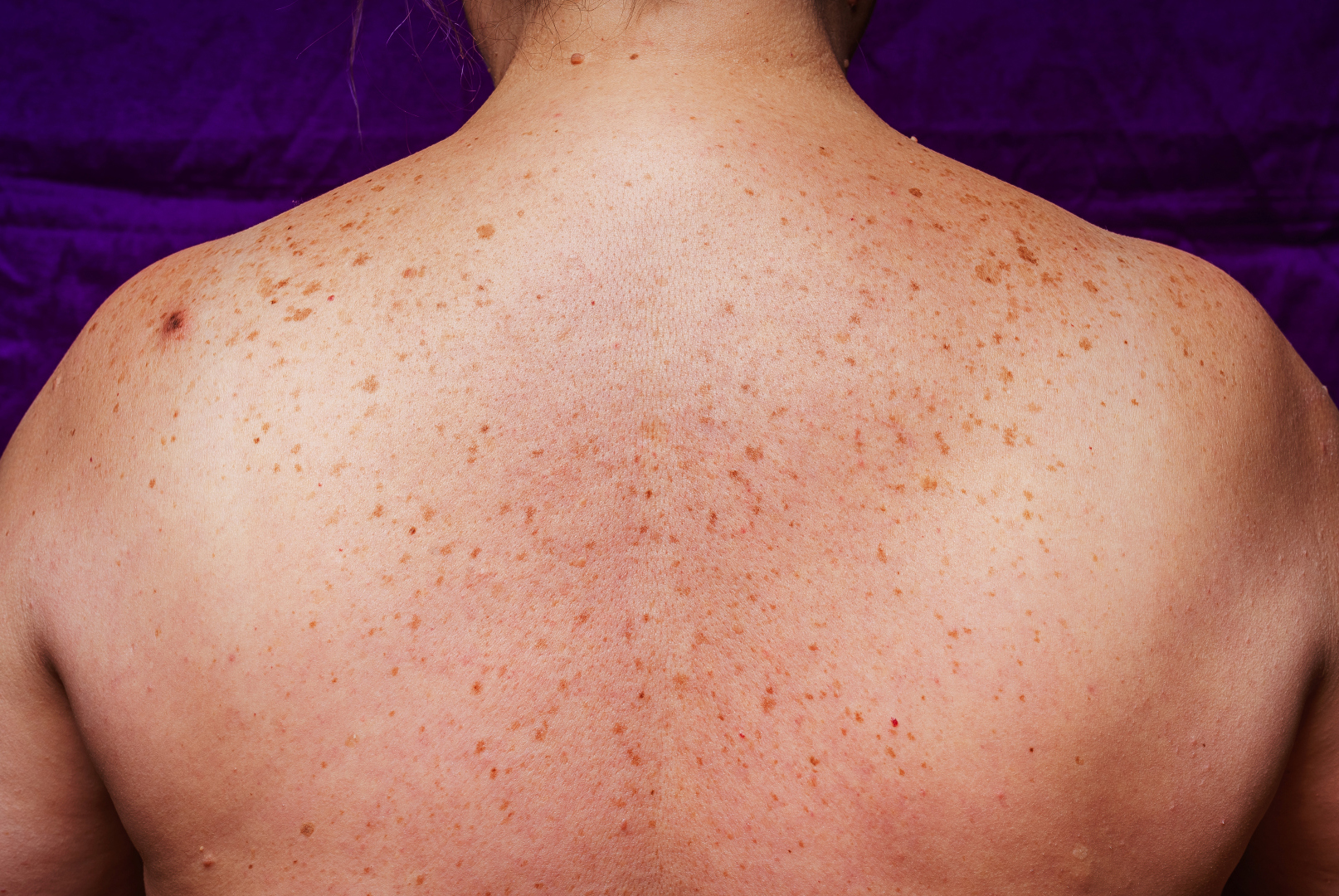
The skin manifestation characteristic of Morbillinum is a macular rash that begins on the face or behind the ears. I recall a case of lupus erythematosus where, as a last resort, I prescribed Morbillinum based solely on the fact that the condition had begun with a symmetrical saddle-shaped rash on either side of the nose. It will rightly be objected that this is a virtually pathognomonic sign of the disease, but in this patient’s case there was a history of a severe bout of measles that had confined him to bed for weeks. Simply taking a single 200-potency globule brought on a fever of 39°, which was to be expected, and the patient was given strict instructions to do nothing. After two days, these general symptoms subsided, and then a sort of scaly peeling appeared all over his body. Biting my tongue — the hardest thing in medicine is to do nothing! — I waited for new symptoms to appear. The patient began to feel increasingly hot, to feel hungry even at night, and to need to uncover his feet whilst sleeping. Sulfur, which I had prescribed as the first remedy without the slightest effect, worked brilliantly this time. Almost 20 years on, there is still not the slightest clinical or biological sign of lupus…
Children who are tired and prone to coughing
Here we begin to see symptoms that are no longer necessarily linked to a previous bout of measles. In other words, the substance’s specific picture is beginning to emerge. All these anaemic, scrawny children, who cough at the slightest exposure to the cold and who easily develop bronchitis, deserve at least one dose of Morbillinum. These are the sort of cases where one might find Tuberculinum indicated, but there is no restlessness, no bad temper on waking, no sweating of the head, and no excessive appetite. This is where Morbillinum comes to the rescue!
Clinical indications
The following indications for Morbillinum are derived from the symptoms observed in measles. Whether or not the patient has a history of measles is irrelevant to the prescription; it is the preparation’s tropism that is the decisive factor.
- Recurrent miscarriage: here again, this is a clinical picture in which the patient does not present a clear picture, and the main complaint is a tendency to miscarry.
- Active tuberculosis may suddenly take a turn for the worse, or a tuberculosis infection that appeared to be under control may flare up again. This finding stems from the measles virus’s affinity for the mucous membranes of the upper respiratory tract. I have not had the opportunity to test this myself, but the Indian literature is full of such cases.
- Chronic inflammation of the eye.
- Chronic otorrhoea.
- Swollen lymph nodes in the neck.
- Chronic inflammation of the periosteum or the joints.
Conclusion
The pharmaceutical industry is prepared to vaccinate against anything and everything, as in the case of the pandemic Covid has confirmed this once again. In homeopathy, there is a strong temptation for anyone who has never studied it to prescribe nosodes indiscriminately, based, for example, on every infectious episode in the patient’s history. In both cases, this approach is wrong.
A pathogen can only thrive in an organism that is already out of balance. One is not ill because one has pneumonia. One has pneumonia because one is ill. It is therefore misguided to seek to administer the nosode of the acute miasm without realising that one must address the patient’s full range of symptoms — which must be treated with a constitutional remedy. At best, the nosode will limit susceptibility to the pathogen but will not cure the general disorder that gave rise to that susceptibility. Finally, at the ultimate level of similarity, for the patient’s recovery to be complete, the active chronic miasm must be taken into account.
Whether it’s a pandemic or an epidemic, homeopaths provide us with unlimited resources to deal with any eventuality. You can recognise a true homeopath by the fact that they visit their patients’ bedsides with a smile!
Just as the great Ivan Illich had predicted [20], materialist medicine, armed with all-powerful technology, has to regress medicine, which has now returned to its starting point, as Hahnemann wrote (Organon, §1): « It is high time that those who call themselves doctors stopped deceiving poor people with their gibberish and finally started taking action – that is, actually helping and healing them.. »
Yes, it’s high time that changed…
[1] Dr Gross, one of Hahnemann’s earliest disciples, prepared a remedy called Morbillinum using blood from a young patient suffering from simple measles, which he diluted homeopathically twice.
[2] In fact, this is precisely the method used in homeopathic trials to make the subject responsive to the substance being tested.
[3] This Chechen custom had been introduced to make it easier to sell their beautiful daughters into Turkish harems.
[4] Often described as the English Madame de Sévigné – not hesitating either to wear a veil or to disguise herself as a man in order to visit Hagia Sophia – Lady Montagu belongs to that category of extraordinary women who deserve to be better known. Much later, Mélanie Gohier d’Hervilly would adopt the same lifestyle, disguising herself as a man to travel all the way to Hahnemann’s practice in Köthen, marry him, and bring him back to Paris!
[5] At the time —Hahnemann made the same mistake— chancre mou and chancre dur were confused, and it would appear that variolation was carried out using the bacteria causing chancre mou, which is not syphilis but Haemophilus ducreyi.
[6] Jenner was thus simply taking a step further the idea put forward by Benjamin Jesty, who, in 1774, deliberately infected his wife and sons with cowpox in order to protect them from smallpox.
[7] Xavier Bazin’s unmissable book *Antivax toi-même* offers a fascinating account of the inconsistencies in vaccine medicine. *Introduction to Vaccine Medicine* by Michel de Lorgeril is another gem that is a must-have for any library.
[8] I would suggest that readers take a look at *L’apocalypse joyeuse*, Jean-Baptiste Fressoz’s remarkable book, which provides a fascinating account of the dubious «arrangements» between industrialists and those in power, unwittingly laying bare the precursors to the great Covid crisis.
[9] The narrative surrounding cowpox is certainly appealing — and even Hahnemann was initially in favour of it before realising that, along with the cowpox virus, all sorts of other things were being injected into the patient’s lymph. When Jenner presented the principle to the Academy, almost all the veterinarians burst out laughing, as they had seen time and again that patients who had had cowpox still went on to contract smallpox!
[10] «Can anything good come out of Nazareth?» John 1:46.
[11] I am obliged here to give a very brief overview, as the subject deserves hours of tuition. See our school, Planète Homéopathie, the only one to offer a comprehensive study of the *Organon*.
[12] Instead of applying the Cartesian reasoning of the thinking subject, which forms their own opinion, they prefer to keep themselves «informed» solely through indirect channels, such as medical journals (mostly funded by pharmaceutical companies), confining themselves to a passive role which does not, however, prevent them from vigorously criticising anything that falls outside the scope of their knowledge.
[13] In other words, they are absolutely characteristic of the condition. A pericardial rub on auscultation indicates pericarditis; erythema migrans indicates Lyme disease; and so on.
[14] These symptoms alone are sufficient to determine the choice of homeopathic remedy. They have nothing to do with the underlying condition, or are the opposite of what one would expect in that condition. For example, cholera is not a febrile condition, yet the patients I treated in Haiti all complained of feeling too hot. Most of the time, the heat was described as being around the left shoulder blade, which is characteristic of Phosphorus. In some cases of tonsillitis, the patient experiences less pain when swallowing, which is the opposite of what is normally expected, and so on.
[15] See «Principles of New Medicine», §11. In this first volume, I provide a new translation and commentary on aphorisms 1 to 70 of the 6the edition of Hahnemann’s *Organon*.
[16] See, for example, https://www.youtube.com/watch?v=xTHRZvyK9e4. A translation of the 2010 article can be found at https://www.agoravox.fr/tribune-libre/article/montagnier-et-la-teleportation-87142.
[17] This chapter owes a great deal to David Little who was my mentor on the subject of nosodes. He is probably one of the world’s leading homeopaths today.
[18] In *Lectures on Homeopathic Theory and Practice*, pp. 141–175.
[19] I owe a debt of gratitude to the excellent book by my friend, the Dr Gaurang Gaikwad “Materia Medica of Nosodes & Sarcodes” – most of the information on Morbillinum.
[20] See his seminal work, *La Némésis médicale*.