
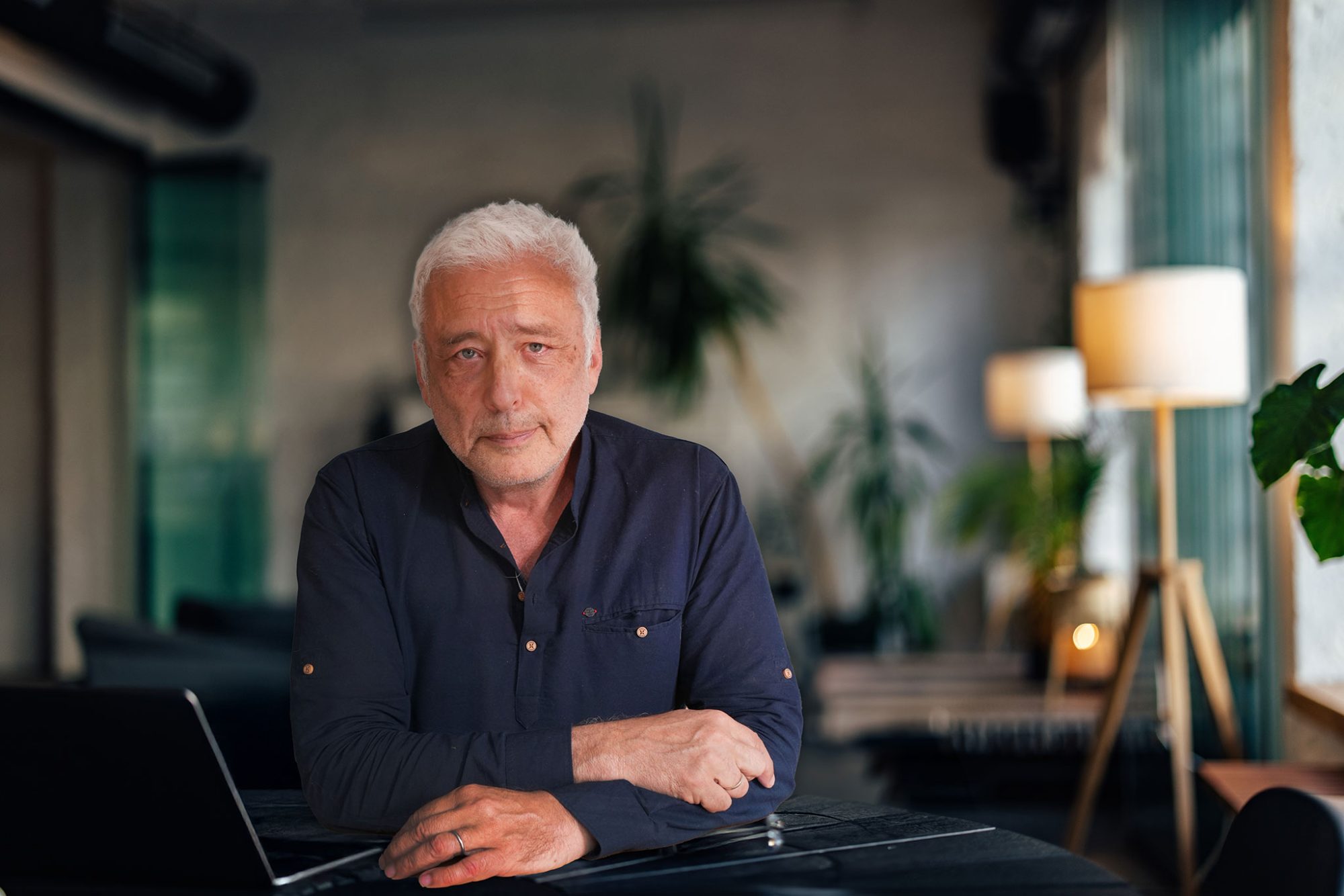
Dr Edouard Broussalian
Quand la guérison devient un acte de rébellion
L’engagement d’une vie.
Édouard Broussalian, né en 1962, est un Médecin Homéopathe passionné. Il étudie, seul, l’Organon et le Répertoire de Kent à 15 ans, fait ses études de médecine à la faculté de Grenoble, en bénéficiant de l’expérience son père Georges, lui-même médecin et élève direct du Dr Pierre Schmidt – maître homéopathe genevois, qui s’était rendu dès 1922 aux USA étudier avec les disciples de Kent. Précurseur, il a créé dès 1977 le premier logiciel de répertorisation (Mélanie), puis le site école Planète Homéo en 1996 qui a formé une communauté vivante mais peu de véritables homéopathes. Il décide d’enregistrer son enseignement pour réaliser une formation sérieuse afin d’enseigner l’homéopathie telle qu’elle devrait l’être, et rendre accessible la pensée de Hahnemann au plus grand nombre. Il lui restait à puiser dans ses centaines d’heures de cours pour restructurer tout l’enseignement et donner naissance à l’IHS pour transmettre une homéopathie fidèle à l’Organon, exigeante et profondément humaine. Enseignant direct et engagé, il lutte contre l’oubli, les dérives industrielles et milite pour une médecine au service du vivant. Ses maîtres et amis — Little, Saine, Master, Vithoulkas — nourrissent son approche rigoureuse. Sur le terrain, en Haïti, au Maroc ou à Madagascar, il soigne dans l’urgence, convaincu que la vraie médecine est un acte d’amour et de service. Avec l’IHS, il forme une nouvelle génération de praticiens libres et engagés.
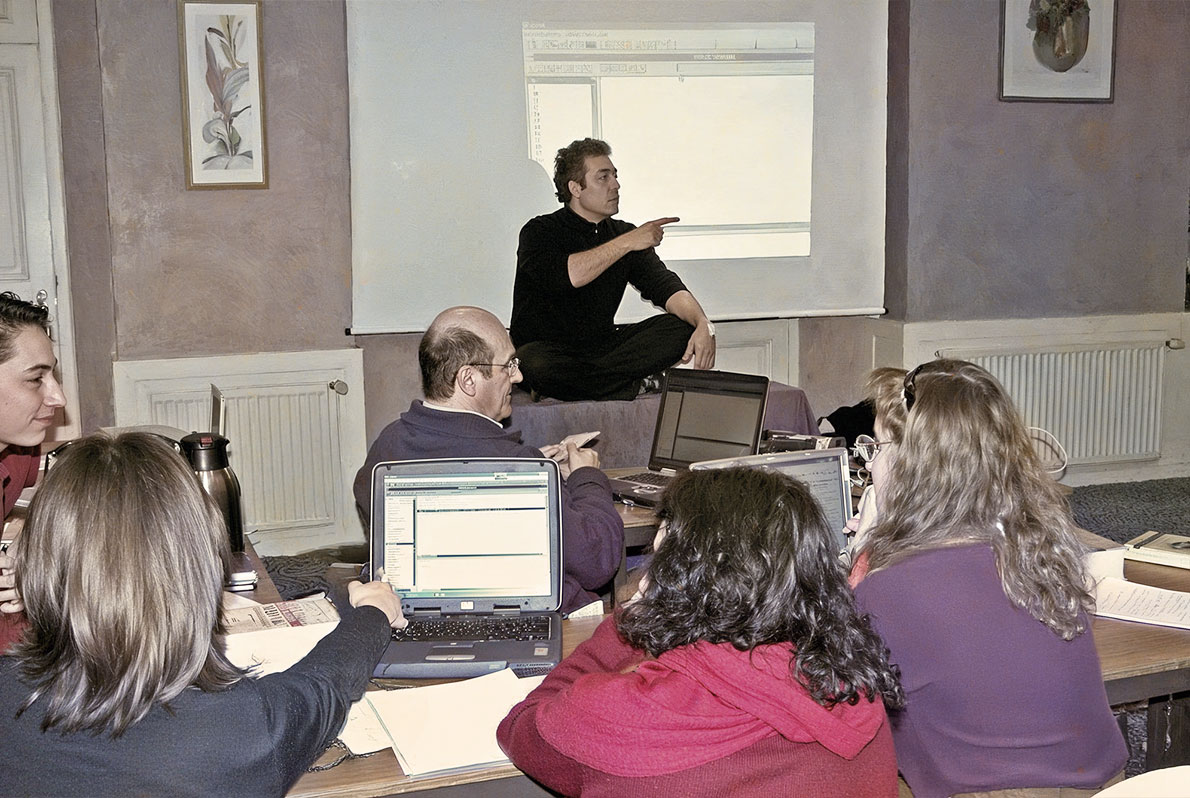
Teaching since 1996
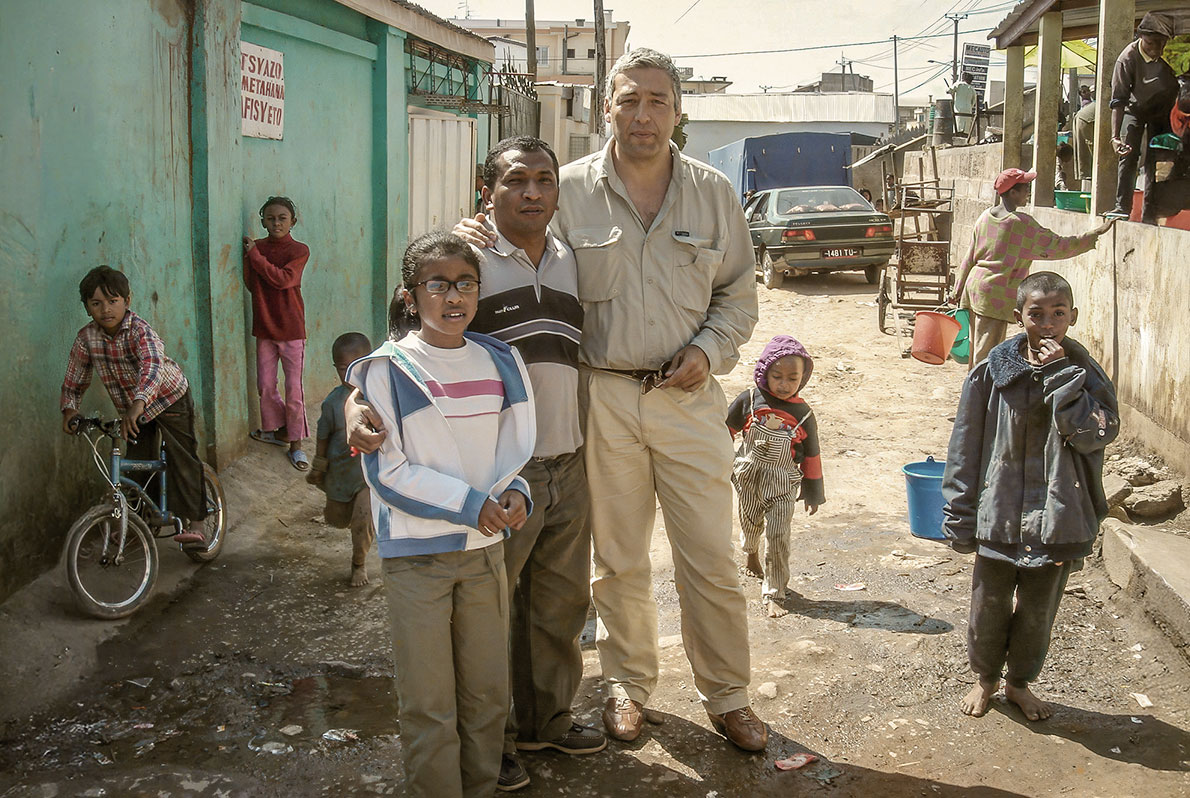
Madagascar in 2005
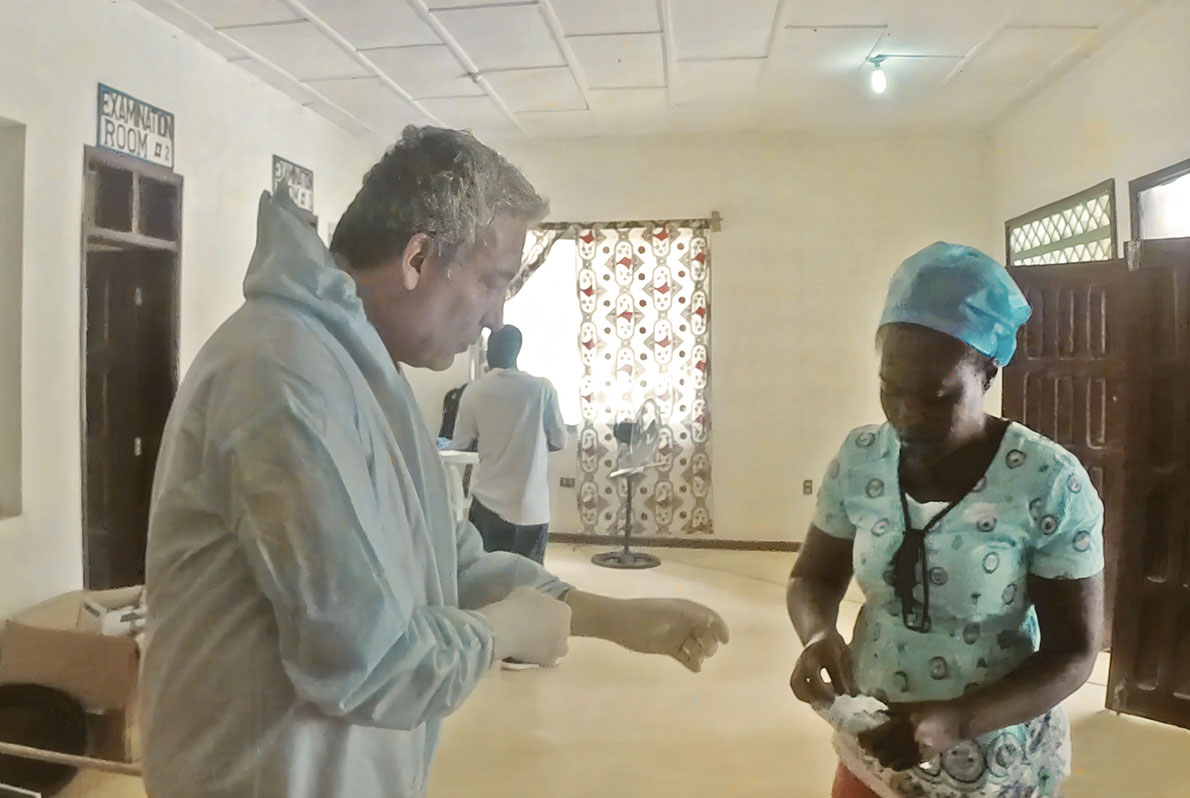
Liberia during the 2014 Ebola epidemic
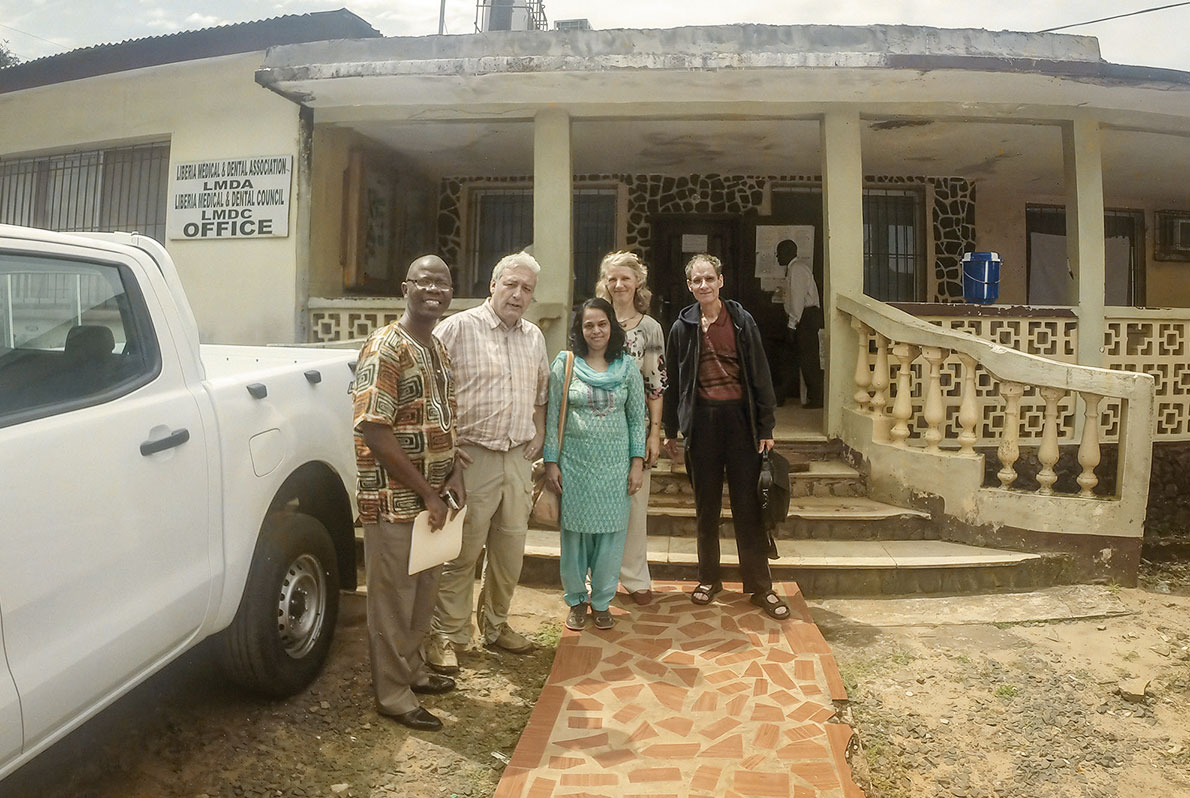
Liberia during the 2014 Ebola epidemic
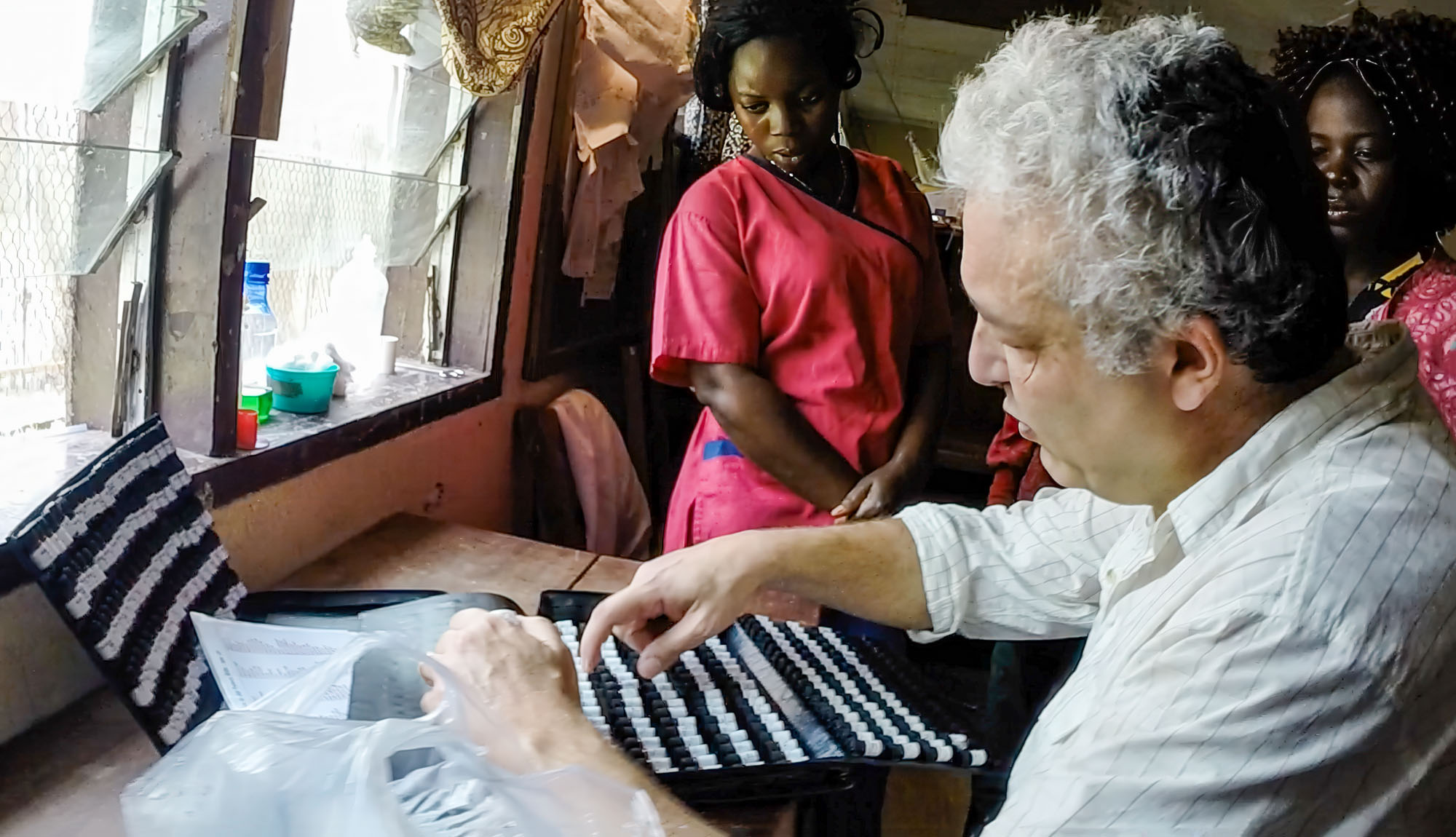
Haiti during the 2013 cholera epidemic
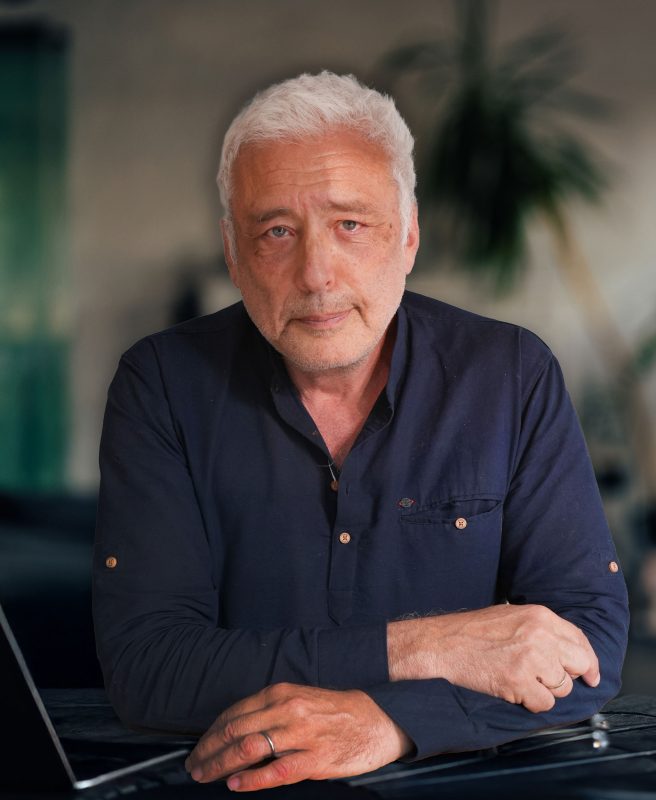
Qui est vraiment le Dr Édouard Broussalian ?
Portrait of a free-spirited doctor, pioneer of contemporary homeopathy
You seem much younger than your writing suggests. Why this discrepancy?
(Laughs) It's true, people often think I'm 20 years older when they read my texts! I was born in 1962, but I started homeopathy at the age of 15, accompanying my father on his lectures. From that time on, I've been passionate about medicine based on sense, logic and natural laws. It's no doubt this early maturity and my technical language that give the impression that I have several lives behind me.
Your father was also a doctor. Is it fair to say that you were born in the Organon?
Absolument. J’ai grandi dans une maison où l’on parlait Répertoire de Kent, fiches perforées, aphorismes et remèdes comme d’autres parlent de football. Mon père, élève de Pierre Schmidt, a été un pionnier en homéopathie hahnemannienne. Il m’a transmis la rigueur intellectuelle, la passion de la guérison vraie, et une quête incessante de cohérence. Il avait cette intuition de relier la science, la spiritualité et le soin — une vision que je poursuis aujourd’hui à travers l’IHS.
You are also a pioneer in the use of technology in homeopathy. Tell us about it.
Dès 1977, j’ai créé le programme Mélanie sur Apple II. L’idée : rendre accessible la pensée de Kent à travers un outil informatique. Je ne cherchais pas à faire « raisonner la machine à notre place », mais à soutenir une pratique fine et exigeante. Puis en 1996, j’ai lancé Planète Homéo, une plateforme militante pour une homéopathie vivante. Aujourd’hui encore, des milliers de praticiens francophones s’y forment ou s’en inspirent. Ce fut un acte de résistance, mais aussi de transmission.
What was the decisive moment when you committed yourself to teaching?
For a long time, I was alone in my demand for fidelity to the Organon. Then I realized that to avoid betraying this science, it was necessary to train, transmit and educate. Not to create a school like the others. But a living, demanding community, driven by a strong vision. The IHS was born of this intuition: to train practitioners who are free, lucid and deeply committed.
How would you describe your teaching style?
I'm direct, passionate, sometimes a little irreverent. But I remain faithful to a rigorous ethic. For me, the Organon is a sacred text, not in the dogmatic sense, but as a source of truth. I teach with the humility of a researcher and the ardor of a rebel. My students say that I make the invisible visible. And that I train them not just in a method, but in a way of being in the world.
What are your battles?
Je me bats contre l’amnésie collective. Contre les dérives de l’industrie chimique. Contre les systèmes déshumanisés qui sacrifient l’individu au nom de l’efficacité. Je défends une médecine au service du vivant. Une homéopathie enracinée, brillante, pragmatique, mais surtout profondément humaine. Et je continue de m’indigner face à toutes les formes de négation — du génocide arménien à la souffrance des enfants privés d’un parent, jusqu’à la négation de l’homéopathie par ceux qui ne la comprennent pas.
Do you have any contacts in the homeopathic world? What are your connections?
Moins que je ne le voudrais, par manque de temps. Mais les liens sont profonds, vivants, inspirants. J’ai eu la chance de me rendre jusqu’aux sources du Gange, pour rencontrer le légendaire David Little, immense homéopathe australien, probablement le plus érudit et le plus respecté de notre époque. Nous avons échangé pendant plus de dix ans, entre Inde et correspondances transcontinentales. Son approche minutieuse et brillante m’a profondément marqué.
Puis cap sur Mumbai, en Inde, où je suis allé me former auprès du Dr Farokh Jamshed Master, l’un des piliers de l’homéopathie indienne moderne. Ce maître, professeur, clinicien hors pair, dirige le département d’homéopathie au CMPH Médical Collège. Avec lui, j’ai appris à apprivoiser la subtilité des miasmes chroniques et l’intelligence des remèdes constitutionnels. C’est toujours une fête de se retrouver au moins une fois par an, surtout que Farokh a décroché la spécialité officielle de médecin cancérologue.
Toujours à Mumbai, je ne peux manquer de citer l’excellent Dr. Gaurang Gaikwad, avec qui nous entretenons une véritable complicité. Sa connaissance et sa compréhension de la matière médicale est proprement incroyable. Je pense qu’il est l’un des plus doués de sa génération.
Chaque année, je retrouve aussi un autre géant : George Vithoulkas, prix Nobel alternatif, auteur de référence, fondateur de l’International Academy of Classical Homeopathy sur l’île grecque d’Alonissos. Surnommé avec raison “The King of Homeopathy”, il a formé des générations d’élèves de haut niveau, dans une atmosphère de rigueur et d’inspiration. Il aime à dire, non sans humour, que c’est “à cause de moi” que les Français sont venus en nombre se former chez lui ! (Et il n’a pas tort.)
Ce contact avec des élèves du monde entier m’a aussi ouvert les yeux : en dehors de nos frontières, la France a parfois mauvaise réputation en homéopathie. Trop d’improvisation, pas assez de fidélité à l’Organon. C’est l’une des raisons pour lesquelles j’ai fondé l’IHS.
Je tiens aussi en très haute estime le Dr Luc De Schepper, médecin belge-américain, brillant praticien et grand maître de l’Organon. Son approche clinique d’une précision chirurgicale, son art pédagogique, son éthique : tout m’inspire chez lui. Il fait partie des rares qui ont vraiment compris, appliqué et transmis la logique hahnemannienne dans sa forme la plus pure. Une perle rare, doublée d’un homme de cœur. Son décès récent a été une grande perte.
Et puis il y a le Dr Didier Grandgeorge, auteur, formateur et médecin homéopathe à Fréjus. Je l’ai rencontré pour la première fois à l’âge de 18 ans, alors que je lui faisais visiter mes petites installations astronomiques. Depuis, nos échanges n’ont cessé, et je me rends régulièrement dans son école pour participer à ses séminaires, riches en sens et en partage.
You've never wanted to remain confined to doctors' surgeries or symposia... What prompted you to take homeopathy to the most precarious places, to the heart of humanitarian emergencies?
Beyond the lecture halls, books and symposia, I've always wanted medicine to be incarnated where it's most vital: in the field, at the heart of reality, in the dust and the emergency. This is how I came to work with admirable people, companions in adventure and mission.
I'm thinking first and foremost of my lifelong friend, Dr Frédéric Rérolle, President of Homéopathes Sans Frontières - France, a tireless advocate of homeopathy in the field, humanistic, rigorous and accessible. Together, we have traveled through many countries, arm in arm with our remedies, our faith and our battered suitcases.
It was he who introduced me to Isabelle Rossi, founder of theAPMH (Association pour la Promotion de la Médecine Homéopathique), a woman of gentle yet formidable strength, a discreet pillar of many humanitarian projects, notably in Morocco at the Skoura center, where homeopathy has taken root thanks to their hard work.
And then there was Haiti, that wounded land I'll never forget. It was after the earthquake. There, in the midst of the rubble, with Dr Kaviraj - an immense Dutch homeopath, a great specialist in agro-homeopathy - we treated dozens of people suffering from cholera in the street, in the midst of a crisis. The remarkable Canadian homeopath, Catherine Saby, was also on board, and played a major role in the expedition's success. Within half a day, fevers were gone, smiles were back. It was overwhelming. Kaviraj's death was a huge blow. He remains forever a soul brother.
In 2011, I returned to Port-au-Prince thanks to the invaluable support of two local figures: Dr Jean-Marie Caïdor, a Haitian doctor trained in homeopathy, and Dr Thomas Hans-Muller, affectionately nicknamed "Boule", a man of action, warmth and vision. Their welcome was fraternal. With them, I was able to continue demonstrating the power of homeopathy in health crisis situations.
These experiences changed me profoundly. They reminded me that medicine is not a status or knowledge, but a service. A form of love in action. It was in the dust of Haiti, the backstreets of Skoura or the dispensaries of Madagascar that I found the true meaning of the word healing.
You often speak of your students with great emotion...
Yes, because they're the ones who will carry on. The IHS attracts bright, curious and committed people. We are training a new generation of caregivers, scientifically minded but rooted in a medicine of meaning. I firmly believe in their power to transform. And some of them go on to become teachers, researchers and benchmark figures. That's the greatest legacy of all.
You also have a strong humanitarian commitment. What does field work mean to you?
Everything. I've treated in the streets of Haiti after the earthquake, in India, Madagascar, Turkey... Homeopathy shows its power with staggering clarity. That's why we're launching a field program for the best IHS students. Each mission becomes a rite of passage, a living laboratory, a testament to the universality of this medicine.
A final word for those who are hesitating to join you?
Don't look for a comfortable school. Look for a school that transforms you. The IHS is not just a training course: it's a call. It's a call to live an intellectual, medical and human adventure, in the service of living beings. I'm devoting my life to it. If this resonates with you, then welcome aboard.