

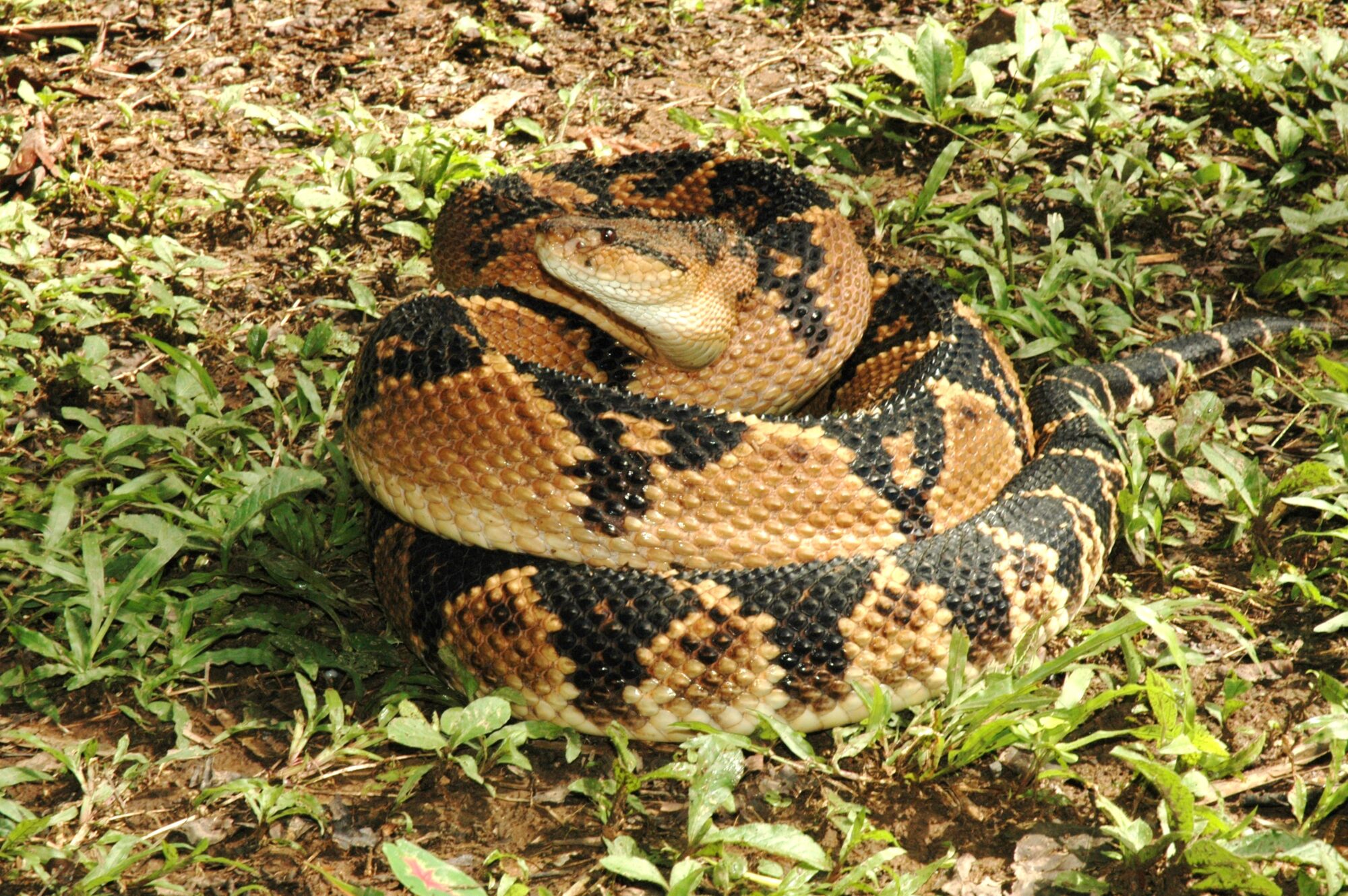
Hering and Lachesis, first proving
I am delighted that my friend Athelas has unearthed this text, which strikes a chord with us as homeopaths. Indeed, Hering’s adventure in Suriname, his deliberate poisoning to explore the properties of venom – which subsequently enabled him to save tens of thousands of lives – is an example to us all, both as individuals and in realising just how diametrically opposed homeopathy is to the monstrous industrial machine that conventional medicine has become.
Honesty, rigour, perseverance and dedication: these are just some of the qualities required by our discipline, and which Hering embodied so well. Once he had fully grasped the revolutionary nature of the new medicine, he leapt onto the table at the inn where he was dining and, in a feverish tone, began to harangue the stunned audience. I would give anything to have witnessed that scene! This is the stuff of which true homeopaths are made; let the faint-hearted, the indecisive and the uncommitted go their own way. The Truth demands that one devote one’s entire life to it. That is why Hahnemann speaks of a duty, of a calling, in his First Aphorism.
I’ll leave you to enjoy this memorable read and look forward to your comments!
Édouard Broussalian
«The second step in the procedure set out in *The Art of Healing* consists of seeking out remedies intended for the cure of natural diseases, and of studying the pathogenetic potency of medicines, so that, when it comes to healing, to be able to find one whose symptomatic manifestations constitute an artificial disease as similar as possible to the totality of the characteristic symptoms of the natural disease to be cured.”.
»That is the duty of a true doctor.’
Organon of the Art of Healing, 6e edition, § 105, Hahnemann
“The final veil that had blinded my eyes to the light of the rising sun was torn away, and I saw the light of the new healing art dawn upon me in all its fullness. I owed it far more than the preservation of a finger. To Hahnemann, who had saved my finger, I gave my whole hand; and to the dissemination of his teachings, not only my hand, but my whole being, body and soul.”
«The final veil that had prevented the light of the new sun from reaching my eyes had been torn away, and I was struck full by the rays of the new art of healing. I was indebted to him far beyond the saving of a single finger from amputation. To Hahnemann, who had saved my finger, I held out my whole hand. As for spreading his teachings, I now devoted to this not only my hand, but my whole being, body and soul.»
Hering, circa 1824–1825, having observed the healing of his «anatomical wound» and escaped the inevitable and irreversible amputation.
Constantin Hering in Suriname
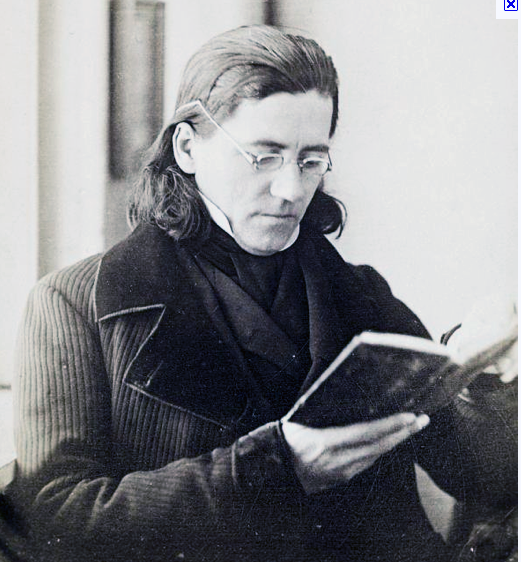
It was Constantine Hering, born on 1er January 1801, when he had just returned from being the first to test some of the medicinal substances that earned 19th-century homeopaths their reputatione century and their successors enjoyed resounding success, with Lachesis – snake venom – naturally taking pride of place.
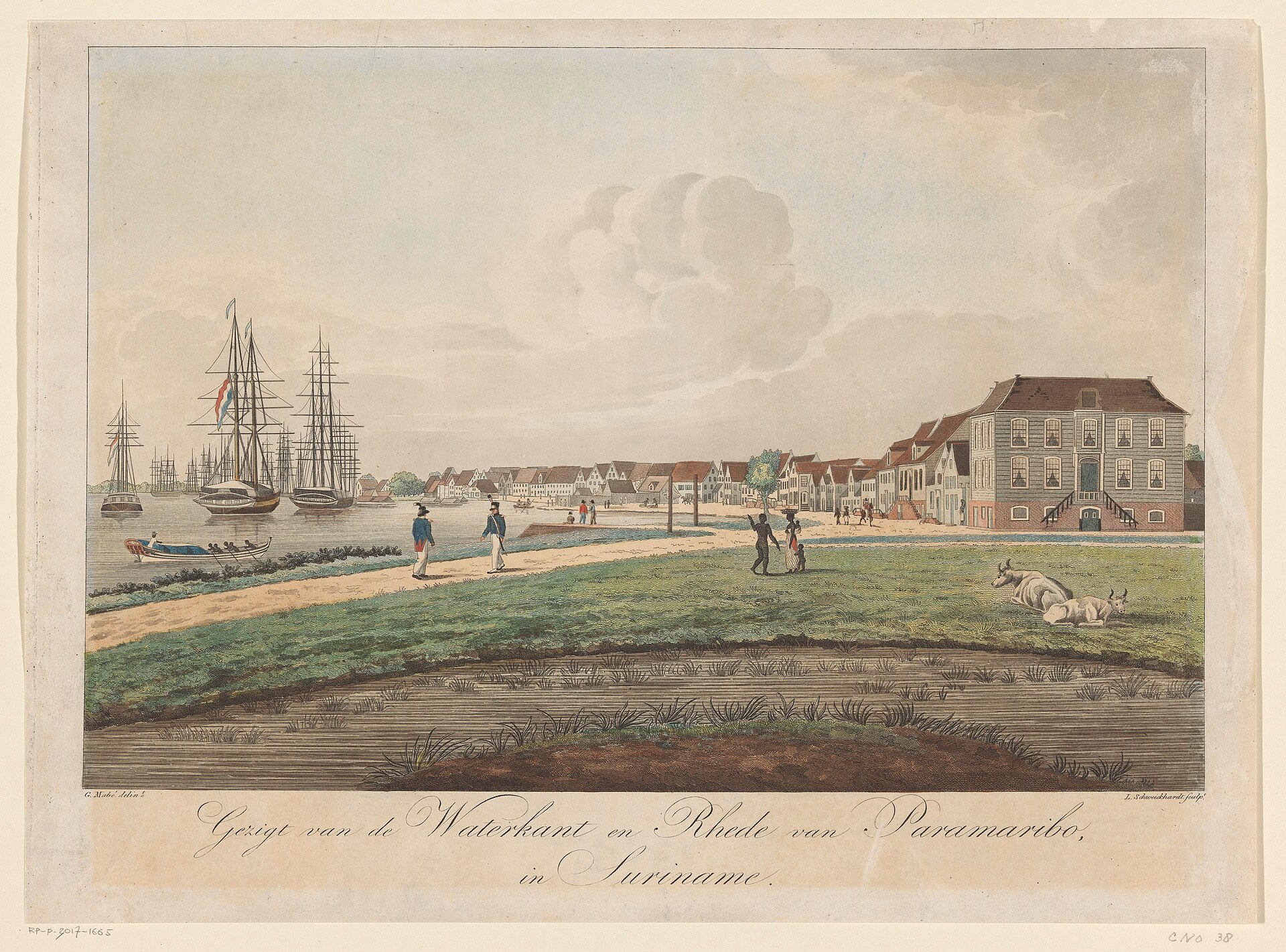
Hering had only been a doctor for a few years when he was sent to Suriname as part of a zoological expedition (as he was also a teacher of natural sciences and mathematics). There, in the country’s hot and humid equatorial climate, for six years he devoted himself, in addition to his work as a naturalist, to researching the specific effects on humans of species of the local flora and fauna: Caladium, Jatropha, Spigelia and Theridion, to name but a few. He also published observations on cases of leprosy which he attempted to treat, with limited success, and began proving Psorinum. Hering then incurred the wrath of the supervisory authorities, who demanded that he cease his ancillary work, determined as they were to restrict the spread of the much-hated homeopathy, even a thousand leagues from Saxony. When the decisive moment came, Hering, an unyielding Atropos, did not falter in his true mission: having succeeded in extracting the venom from the serpent that unravels the thread of life, he resigned and set up practice as a homeopathic doctor in Paramaribo.
A memorable piece of writing
Planète Homéopathie is delighted to now present to you the memorable text written by Hering to recount his experience with Lachesis. In the first part, Hering sets out his views on the research needed to enrich the materia medica; he then recounts how he went about his work with a snake that, as luck would have it, was less terrifying than the others… In the second part, he meticulously records the pathogenetic symptoms he experienced whilst triturating the venom to the first centesimal dilution.
This is a first collection, but it is already of great importance: it already contains over a hundred symptoms, recorded in the order in which they appeared. Some, of course, are or appear to be of a toxic nature, but other surprising ones stand out immediately; these will prove to be highly characteristic of the remedy, as confirmed by subsequent provings. Even on first reading, one can deduce a few general observations about the venom under study, and you will take pleasure in discovering and/or rediscovering them through Hering’s attentive and precise writing. Finally, one glimpses the venom’s remarkable ability to elicit an alternating effect on the sensorium and the mentality, either by stimulating or depressing them. It is essential here to emphasise the abundance of psychological disturbances observed with a trituration that is supposed to be merely «a low dilution». This observation contradicts the absurd theories put forward by those (particularly in France, unfortunately) who inconsistently restrict the use of «high dilutions» to cases involving mental symptoms, or reserve «low dilutions» for localised disorders.
Hering spent many more years working on Lachesis, which was included in the Materia Medica in 1837 in an exemplary volume in which the symptoms were, for the first time, classified into three categories: the effects of the bite (toxicological or envenomation symptoms), the effects of the potentised venom, and finally the cured clinical symptoms (see The Effects of Snake Venom, Arranged Comparatively for Therapeutic Use, with an Introduction to the Study of the Homeopathic Materia Medica).
Enjoy the read!
Athelas, 7 May 2020.
Observations on the pathogenic potency of snake venom
By Dr C. Hering, in Paramaribo, Suriname.
Published in the Archive of Homeopathic Medicine, vol. X, 2e notebook, Leipzig 1831.
The original translation of this text appeared in the journal Homeopathic Library, Volume 2, 1833 (pp. 52–63): https://books.google.fr/books?id=0VYs5xW0KdgC&dq
Proofread, edited, expanded and annotated by Athelas, May 2020.
Substances from the three kingdoms
The ancient physicians of Arabia and the Middle Ages, who still drew heavily on Eastern traditions, used a large number of venoms as medicines, as well as certain animal parts that are now regarded as having no therapeutic effect. Almost all these remedies have been forgotten, and only a few have survived in folk medicine. Modern science must endeavour to extract from this chaos of traditions and hypotheses that prevailed in the ancient school—ranging from the use of animal substances to that of alkaloids— everything that may be of genuine use to the art of healing, by subjecting the most remarkable and diverse medicinal agents to a fresh examination, so as to properly assess their mode of action on healthy human beings.
It will be the task of future generations to systematically identify the similarities and differences in the pathogenic effects on healthy humans of substances from the three kingdoms: animal, plant and mineral. It will then be possible to identify in advance, with greater certainty, the agents most worthy of investigation and most likely to yield significant results.
As for us, who are still in the dark, yet must nevertheless make the most fruitful choice possible, it is important that we focus on the most salient substances: for example, the principal elements of the earth and the sea, almost all of which have already been recognised by Hahnemann as antipsoric, the elements of the animal kingdom, and so on. Among plants, we should give priority to examining those known for their rapid, vigorous, violent or prolonged effects, as well as those that resemble remedies that have already been tested. The’Atropa mandragora, for example, which was once so famous, should be worth noting, as it is situated next to the belladonna ; we should also look into the aconites with yellow flowers1. It would be advisable to focus on plants whose effects are potent and which, in this respect, stand out from the rest of the families to which they belong.
If one considers the animal kingdom from this perspective, one is struck by the small number of substances that have been studied to date, all the more so as all those that have been tested have yielded remarkable results, which have become increasingly significant the further down the scale of organised beings one has gone. It suffices to mention musk and castoreum2, amber, cantharides, sponges, and cuttlefish. The classes of birds, fish and amphibians have as yet yielded nothing; of all the animals of the lower orders, sponges and cuttlefish are the only ones known. We have little to expect from animal substances analogous to musk, castoreum and amber other than effects similar to those produced by the latter; perhaps the same is true of the class of insects, which always act chiefly on the genitourinary system; but fish and amphibians will certainly offer us some very distinctive pathogenetic properties3, as well as animals of the lower orders. Judging by the traditions of folk medicine, a large number of fish are said to possess medicinal properties, and it is known that the number of venomous species is proportionally greater than in any other class of the animal kingdom. Folk medicine has made even greater use of amphibians; it believed that these hideous and repulsive creatures provided specific remedies for equally hideous diseases. Thus, throughout history, we have seen the use of roasted toads, dried lizards, snake fat, and the blood and bile of tortoises extolled as remedies for the most stubborn ulcers and skin diseases.
Snake venom
Of all animal poisons, the most remarkable is, without a doubt, snake venom, which, until now, no one has dared to use as a remedy. We know nothing else about it except that it is a secretion similar to saliva, and the isolated accounts of people accidentally exposed to its effects tell us very little indeed.
There are many examples of people bitten by snakes who have remained prone, for years or even for their entire lives, to skin rashes of various kinds; it is known that a large quantity of venom kills with lightning speed, that a smaller quantity causes swelling, gangrene, etc., and that even very small amounts can still cause serious complications. All this must make one wish to experience the effects of the venom whilst mitigating them sufficiently to remove their severity, and to be able to observe them more safely. As for myself, long before I travelled to warmer climes, I had always harboured a keen desire to one day experience the dynamic effects of this most potent venom.
I have never fully accepted the chemists’ assertion that venom only takes effect when it enters a wound, and that it has no effect when taken by mouth. It is quite true that a drop of venom on the tongue does not produce the symptoms that follow its entry into the bloodstream, but might this not be because human saliva neutralises or alters it? The venom must be able to spread and come into contact with the nerves and the blood. We know that it has an astringent taste, which in itself might have led one to expect some effect.
The question now is how to administer this venom so that it acts on the nerve endings, just as it acts on the ends of the blood vessels when a bite occurs, and with a strength sufficiently mild to ensure that the experiments pose no danger. The most suitable method is trituration with lactose or dilutions with alcohol. Chemists may well object to the idea of dissolving saliva in alcohol; I can, however, reassure them on this point. I have heard from highly trustworthy observers that, when dispatching animals preserved in alcohol, one must take great care not to place venomous snakes alongside other specimens, as the alcohol in which these snakes are preserved acts as a corrosive agent on other animal substances4. This finding would make it possible to carry out a few experiments to see to what extent the active component of the venom can transmit its properties, and if it is proven to act dynamically, chemists may well discover a new alkaloid there.
It cannot be argued that grinding the venom with milk sugar causes it to lose its potency, for it is well established that the dried fangs of snakes, even after having been immersed for a long time in spirit of wine,5, can still cause the most serious accidents. Experiments on snake venom mixed with milk sugar will reveal not only its pathogenic effect on healthy humans, but also the best ways to counteract its effects in those who have been bitten; they will reveal its true antidotes amidst the multitude of specific remedies that have been recommended. Perhaps they will also lead to the discovery of a medicine of great importance within this venom. I shall confine myself here to recalling the fact reported by Galen6, that a leper was cured by drinking wine in which a viper had been drowned. I have been told here (in Suriname), as a great secret, that the head of a venomous snake, roasted and ground to a powder, is one of the main ingredients of a powder which not only protects against the effects of a bite, when small amounts are rubbed into the skin, but also serves as a remedy after the bite. The powdered head must not belong to the same species as the one responsible for the bite. I have myself seen a leper cured, by this very powder, of all the buboes he had on his face and elsewhere. We must, however, be careful not to dismiss folk remedies; before Hahnemann, they were one of the main sources of materia medica, and we will still find much to learn from them. Human instinct has often led people to discover remedies that experience alone would have taken centuries to uncover. How did the South American savage manage to find, amongst the thousands of plants surrounding him, the ten or twelve specific remedies he uses, and whose application we shall borrow from him?
In search of a large living snake
All this had inspired in me the keenest desire to obtain, alive, some large venomous snake; but all my efforts and financial outlay remained fruitless for a long time. A fine eight-foot-long rattlesnake, which was intended for me, was snatched away by an Englishman who forced the black man who was bringing it to me to hand it over to him. That snake was immediately transferred on board a ship and locked in a fine cage, so that I did not even have the chance to try to collect a little of its venom. The ship’s captain even told me later that he had had the whole thing thrown overboard without the slightest delay, and that he would have preferred to have the devil on board rather than that snake, which would not have let him sleep a moment’s peace.
A few small snakes, which I managed – not without difficulty or danger – to catch alive in order to extract their venom, yielded such tiny quantities that I was unable to make any use of them.
The capture of the snake
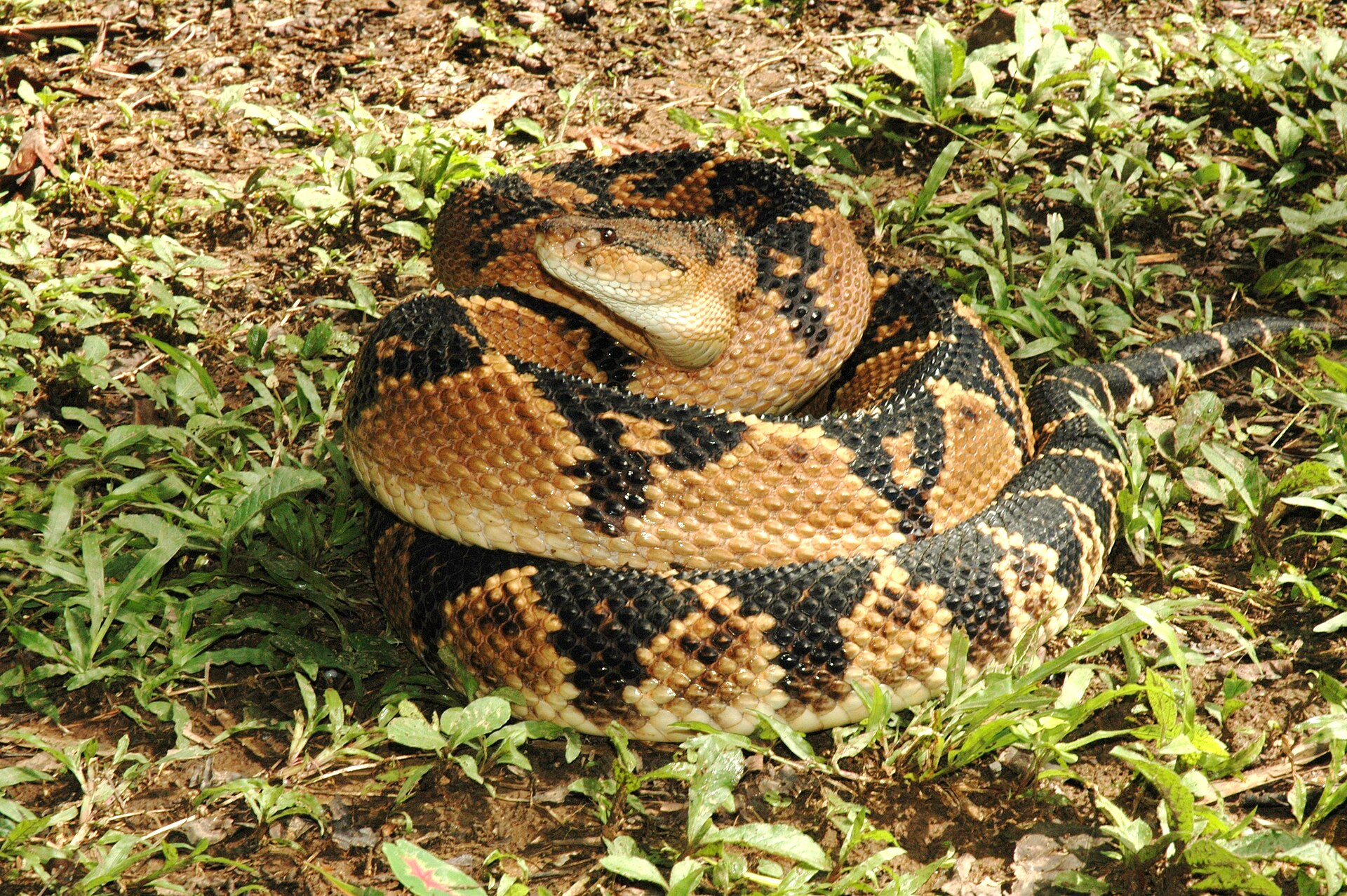
Finally, on 28 July 1828, I had the pleasure of receiving a large, fine snake which a hunter had half-killed, but which still had enough life left in it to serve my purpose. It was a Trigonocephalus lachesis, whose bite is even more deadly than that of the rattlesnake. It was ten feet long, and it is worth noting that specimens of any smaller size are never found here, which is probably because this species only appears in the country’s forests during the mating season, or when the individuals have reached a certain stage of growth. This snake had been caught near the town and tied up, half-dead, in a basket. During transport, it had still shown signs of life. I opened the basket to take it out, and seeing that its vertebrae were broken, I had it untied to see if it could still move its head. Its colours were still brilliant, its mouth was closed, and its eyes sparkled with life, but it was no longer able to move. I immediately set about extracting the venom, but I had some difficulty getting my men to help me, as they were terribly afraid of it. As, immediately after striking the snake, it had been seized and tied behind the head, I could count on a considerable quantity of very fresh venom.
I made it open its mouth as wide as possible, so that the two fearsome fangs were fully extended, just as they would be at the moment of the bite. To assume this position, the fangs move, their tips curved like an awl7, from top to bottom and from back to front, and the skin sheath that completely covers them whilst at rest then retracts to a greater or lesser extent towards the root. I had an assistant hold the head steady, and I placed a small stick, pointed at both ends, between the jaws to keep the mouth open—an operation which was not without its dangers, given the proximity of the fearsome fangs. With the fangs now fully exposed, I cleaned the mouth by removing all the viscous slime that filled it, and I prepared everything necessary to collect the venom. By pressing lightly with my finger on the spot where the venom sac is located, I saw it immediately protrude from the opening at the rear of the fang, one or two lines above the tip. It is thus evident, from the very position of the venom sac, that when the snake opens its mouth and raises its fangs to bite, the sac is slightly compressed, and that it then fills the fang with venom right up to its opening. But this opening is too small for the venom to flow out. The tip of the fang serves only to introduce this opening—which ends in the shape of a channel—into the wound; as soon as it comes into contact with the wounded tissue, the latter draws the venom from the opening as if through a capillary tube.
By pressing harder on my snake’s venom sac, I soon caused the venom to flow more freely, and it eventually formed a droplet at the tip of the fang. I immediately placed a small pile of milk sugar on a piece of paper beneath it8, and I caught the drop just as it fell.
The venom is similar to saliva, but has a less viscous consistency; it is transparent and clear, though with a slightly greenish tinge. The droplet forms easily and quickly at the tip of the fang, and falls without forming a thread before it reaches the diameter of a drop of alcohol. Lactose absorbs it rapidly. When placed in alcohol, with or without lactose, it does not coagulate, but forms a sort of light cloud.
I continued in this way, taking care to squeeze the vesicle to extract all the venom, first from one fang and then from the other. I noticed that when I applied pressure again, after a shorter or longer interval, the drop formed almost as quickly as the first time, which seemed to me to indicate that the snake still had some life left in it.
The preparation of the venom
In this way, I managed to collect ten drops of venom from a hundred grains9 milk sugar, and I ground it immediately for an hour. Ten grains [proportionally equivalent to a drop of venom] of this preparation were then ground again with a further one hundred grains of milk sugar, in order to achieve approximately a centesimal division, taking the drop as equivalent to a single grain.
For my trials, I used the second 1/100 dilution. However imperfect my observations may still be, I am recording them here, both to demonstrate the pathogenic potency of the venom and to show that experiments using hundredths of a grain present no danger. This, moreover, is a starting point for more comprehensive trials that will need to be carried out with this substance. I shall propose using the 1/10,000 dilution in preference, which I believe will prove even more effective.
A call to keen observers
I would very much like to see one of our zealous literary figures undertake to compile all the known facts concerning the effects of snake venom; that would be the best way to shed light on this most curious and important subject.
If we had a well-compiled summary of all the accounts of accidents resulting from bites, and particularly those in which a small quantity of venom, rather than causing death, gave rise to chronic conditions of varying severity, one could draw valuable conclusions from it. Although the effects of venom differ markedly between the various species of snake, it would, I believe, take too long to list separately the incidents caused by each particular species. Information in this regard should simply accompany each symptom. The name of the country where the incident took place should never be omitted, as this detail is of great importance.
In the case of a young girl who had been bitten on the finger by a snake near Zittau, a form of vesicular erysipelas developed, which spread to the inner surface of her arm and extended downwards along her body on the same side. After a few days, the blisters burst and dried up; the epidermis peeled away, but the skin remained red, warm and itchy. On the seventh day, the patient was feeling very well. On the fourteenth day, the blisters reappeared, but only on the finger that had been bitten.
There is an account of a bite by *Trigonocephalus lachesis*, reported by a Dr Kûhn, in the Dutch journal entitled Hippocrates.
Notes
- As regards yellow-flowered aconites, we have Petroz’s proving (1852); following in Hering’s footsteps, he tested Aconitum lycoctonum, the wolf’s-bane. Strangely enough, this plant, along with Cicuta and Conium (!), gives one a strong craving… for cabbages (!).
- Castoreum: secretions from the genitals of beavers (see *Synoptic II* by Frans Vermeulen, French edition, p. 249).
- It is worth noting, somewhat tongue-in-cheek, that Hering makes no mention of birds. One does indeed wonder what particular natural substance, specific to their biological class, could produce demonstrable dynamic effects in humans. To our knowledge, allopathic medicine does not use any such substances either.
- A mordant acts as a chemical link between two substances that do not normally bind together. For example, to ensure that a mineral dye adheres to wool (which is made up of carbohydrate-based fibres), a compound is added that binds to both the wool and the dye (this is known as mordanting). Here, the alcohol actually acts as a common solvent for the venoms and the other substances; it links them together, as it were, and in doing so facilitates a reaction between the venom and the second animal species, thanks to its solvent effect (as explained by our friend Jean Umber).
- Alcohol content, equivalent to ethanol.
- Galen’s Latin name.
- A punch, usually made of steel, straight or curved, tapering to a diamond shape at the tip, fitted with a wooden handle, and used mainly by saddlers and shoemakers for piercing and stitching leather.
- As snake venom is an animal secretion, Hering chose to triturate it with sugar rather than dilute it directly in alcohol, in accordance with Hahnemann’s recommendations (5e Organon, §271).
- In metrology, prior to the definitive adoption of the metric system, the ‘grain’ was a small weight representing one seventy-second of a ‘gros’ (itself equal to one-eighth of an ounce), and equivalent, in the decimal system, to 0.05 g. The CNRTL tells us that «To work out the value of a pearl, you multiply the square of its weight by the base price per grain or carat» (Metta, Precious stones., 1960, p. 120).
Observations on the effects of venom
Whilst the mixture is being ground
I noticed that I was breathing in the very fine dust that was escaping from it1.
This resulted in a very peculiar sensation at the back of his throat, almost like a tickling.
After an hour, I felt a pain in my neck. It felt like a pinching sensation in a very specific area, at the back of my neck on the right-hand side, and as if on the side of my throat. This pain did not increase when I swallowed, but it did increase with pressure2.
A few hours later, whilst travelling by tram in the open air, I felt a sense of anxiety, as though some great misfortune were unfolding far away from me; it was like a painful and overwhelming premonition. I was deeply tormented by it for an hour.
Towards evening, a state of mind entirely unlike any I had ever experienced before – a jealousy bordering on delirium, as mad as it was insurmountable.
In the evening, extreme listlessness, tiredness and drowsiness, yet unable to sleep.
During this drowsy state, or half-sleep, I find myself in a particular frame of mind that lends itself to talkativeness. I talk a great deal; I want to tell stories without sitting properly; my speech soon turns into rambling nonsense, and I immediately realise that I am talking nonsense. I then pull myself together, only to start the same routine all over again shortly afterwards, and so on. Half the evening is spent in this way.
That same evening, a complete loss of appetite caused by an unpleasant sensation in the abdomen. A craving for beer.
From time to time, the neck pain returns.
After going to bed feeling very drowsy, I can’t get to sleep; I soon find myself wide awake. No position feels right; everything seems to put pressure on my neck and the back of my head.
Even the slightest touch to the larynx causes pain and a feeling of suffocation. This exacerbates the neck pain.
Throughout the evening, the palms of the hands and the soles of the feet feel intensely warm.
After going to sleep very late, I wake up early in the morning.
In the morning, scanty stools with an almost clay-like consistency.
On the second morning, diarrhoea.
On the second afternoon, whilst asleep, I had extraordinarily cheerful and humorous dreams.
First attempt
1 grain of the 1/100 preparatione in half a cup of rainwater3.
After the midday nap [a nap taken around midday, particularly in hot countries], a feeling of tightness in the windpipe. The phlegm does not come up, as it usually does.
A loss of appetite.
Remarkably little inclination to smoke.
In the evening, a pleasant feeling of warmth; the sensation is neither confined to the body’s interior nor limited to the skin; it resembles what one feels after a cold bath, or after sexual intercourse.
Restlessness; he feels compelled to seek the great outdoors; he wants to do and try all sorts of things.
Stool was delayed until the evening; passed with some effort, though the amount was insufficient.
A tendency towards liveliness and anger, without being bad-tempered.
Distrust; a suspicious disposition.
A shiver running quickly down my spine.
In the evening, I experience a runny nose accompanied by a tingling sensation at the tip of my nose, pressure and watery eyes at the inner corner of the eye. These symptoms soon disappear.
Before midnight, I don’t feel like going to sleep.
Around midnight, sudden diarrhoea. Pale stools, accompanied by severe cramps and an ammonia-like odour.
Diarrhoea every evening for 7 days, with large stools, preceded by fleeting pain in the colon and followed by a throbbing sensation in the anus, as if from a small hammer.
Mucus secretion in the trachea is greatly reduced; that in the nose and throat is, on the other hand, increased.
On the third night, a wet dream – a very rare occurrence for the observer – accompanied by a sensation of pleasure of extraordinary intensity.
A marked and persistent tendency towards indifference and forgetfulness.
No desire to smoke (in a heavy smoker), though without any aversion to it. This lasted for several weeks.
A more pronounced inclination to drink wine; but the wine has far less effect than usual.
For a whole week, a loss of appetite and pain in the pit of the stomach when pressure is applied.
Itching between the fingers. Scratching the small, hard, shiny patches causes a blister to form, accompanied by a sensation of tightness and a burning sensation.
Often, a restlessness that compels one to seek the great outdoors.
The effects were thus particularly pronounced for a week, then gradually subsided, before finally disappearing altogether.
The persistent runny nose and diarrhoea may indicate that the dose was too high. The most recent symptoms were all very persistent and very pronounced.
Second attempt
1/2 grain of the 1/100 solution in a cup of rainwater.
[Hering therefore reduces the quantity and increases the dilution.]
The first day.
After a few hours, I felt pain in my neck, to the side of my larynx, slightly towards the back, in a very localised area.
The larynx is tender to the touch.
A feeling of emptiness in the abdomen, as if one were on an empty stomach.
A very intense arousal of the sexual instinct.
In the evening, a marked tendency to be easily frightened. Increased appetite.
Constant, exhausting dreams, with occasional awakenings throughout the night; and yet, upon waking in the morning, the feeling of having slept well.
The second day.
In the morning on an empty stomach, frequent and noisy passing of flatulence [accumulated gas].
The anus feels as though it’s closed.
Dizziness whilst sitting down after walking.
A very distressing pain, like a constant, deep ache in the back, next to the inner edge of the shoulder blade, which forces one to lean backwards. (This pain had been felt before, but it had returned for the first time in a very long time.)
A sense of excitement throughout the morning.
Yesterday, no stool; today, stool delayed, scanty, loose; after smoking.
Before midday, erections.
Before midday, drowsiness after being out in the fresh air, followed by several hours’ sleep with continuous dreams about important matters, which are completely forgotten upon waking.
Increased appetite.
Severe itching in a localised area of the instep.
In the evening, I feel excited and in a chatty mood, but the back pain flares up rather unpleasantly.
Painful, intermittent twinges in the carpal bones.
In the evening, a hiccup.
Very late in the evening, sneezing and a runny nose. Dreams continued right through until the morning.
The third day.
A more frequent need to urinate, and the passing of dark-coloured, frothy urine.
A greater sense of well-being.
Smoking for too long makes you feel unwell.
A constant sensation, as if I were about to have a bowel movement, with no other result than passing a few wind.
Loose stools; with blood rushing to the head and dizziness.
A kind of ecstasy, as if following great joy, or a sublime sensation. He wants to speak and act, and everything seems easy to him. – All day long.
Highly impressionable; moving poems affect him deeply, even to the point of tears; he feels the need to let off steam by crying his heart out.
After crying, pain above the eyes.
During the meal, a severe itching sensation in my nose. (A symptom I used to experience, but which had long since stopped.)
One evening, no desire to sleep; the next evening, an overwhelming drowsiness.
At night, a constant stream of daydreams, interrupted by frequent awakenings.
The fourth day.
In the morning, I felt fine, but I didn’t have my usual appetite.
Here and there on the fingers, small red spots accompanied by itching.
Here and there, small blisters on the fingers, like scabies spots.
During the midday break, poetic and imaginative dreams.
After midday, sexual arousal. In the afternoon, after having tea, a sudden feeling of unease, hiccups, belching, regurgitation, the passing of an extraordinary amount of flatulence, followed by relief. I had never experienced these symptoms so persistently or so intensely before.
The fifth day.
Lots of dreams; an early start.
In the morning, there were strong, gusty winds.
In the morning, there’s a buzzing sound in my right ear – which is my better ear – like the roll of a drum. It stops when I wiggle my finger in my ear, but it always comes back.
For several days, every now and then, I’ve felt the need to take a deep breath, especially when sitting down.
Itchy blisters on the outside of the middle finger of the left hand. After a few days, a wart-like bump appears, which leaves a scar when it disappears.
Hoarseness. Sounds are difficult to produce, as if there were some obstruction in the tongue. Coughing up phlegm does not alleviate the symptom. A very persistent symptom.
Every day, a loose stool, but it is delayed a little more each day, so that it gradually shifts from the morning to the evening, then from the evening back to the morning, and so on.
The blood rushes to the head with great force.
In the evening, the ringing in my ears returns. I feel a pain near my temples, as if a rash were about to break out; it subsides the following day.
A bite from a chique [a parasitic insect that burrows under the skin of humans or animals, causing intense itching and abscesses] causes extraordinary pain on the first day. The small wound does not heal and remains painful for many days. The skin between the toes cracks right up to the surface.
The sixth day.
In the morning, sexual arousal accompanied by pain in the thighs and extreme weakness, as if one were completely worn out.
All day long, I felt utterly dejected, both in mind and body.
There were strong, gusty winds this morning.
Spasmodic pain inside the anus, just before and just after a bowel movement.
A hearty appetite; after eating, the need to lie down.
A marked tendency to stay in bed: he cannot bear to sit up.
After the midday nap, he felt tired and had pain in his thighs and back, alongside the spine. His breathing had no effect on this.
The following days up to the fourteenth day.
Every night, I have meditative dreams. This symptom only begins to ease slightly after two weeks.
During the day, he recalls his dreams, as if he had dreamt everything that is happening; but in a different way, and as if he had simply forgotten it.
Very heavy stools, followed by a small amount of blood (on the eleventh and twelfth days).
After a normal bowel movement, a prolonged sensation of burning and soreness in the anus (on the thirteenth day).
A small cluster of flat warts appears on the outer side of the thumb (on the ninth day).
Very frequent passing of clear, foamy urine.
Persistent back pain when sitting, as if there were a foreign body in the spine and shoulder. This pain makes one want to breathe deeply, without providing any relief; it also forces one to lean backwards.
Blisters accompanied by very severe itching, followed by a burning sensation along the outer edge of the right hand.
An itchy nose whilst eating.
I never have an appetite in the morning.
As dinner was taking a long time to arrive, I felt a sudden wave of unease, followed by spasmodic yawns and then fainted. You just need to sit down calmly and eat straight away, and then everything gets better.
After passing stools and urinating, a small amount of urine keeps coming back, creating an urgent need to pass it.
Great composure and firmness in the face of circumstances that were highly likely to cause irritation.
The hoarseness remains severe. There is something in the larynx that cannot be dislodged by coughing up phlegm, even though the mucus is being expelled effectively.
Intense sexual arousal, but without lewdness. Once overcome, it gives rise to a strong inclination towards intellectual pursuits.
The power of imagination is greatly enhanced when it comes to intellectual pursuits. Scenes and events flood the imagination.
As soon as an idea has been put down in writing, a host of other ideas spring to mind and follow hot on its heels, so that one cannot stop and finish.
An extremely outgoing nature; great liveliness in conversation; coupled with an excessive aversion to anything dry or tedious.
The more humour there is, the greater the tendency towards mockery, satire and comic ideas.
END4
Translator’s note: We shall not include here certain symptoms observed in two patients to whom Dr Hering administered the venom as a remedy; these observations are still too incomplete. We shall await the follow-up promised by this zealous observer in this regard.
Notes
- It would also seem that the possibility of concomitant inhalation cannot be overlooked.
- This is THE famous symptom of Lachesis, confirmed time and again – the one we would retain if we had to choose just one (though that’s not something you should actually do :-)), which appears in other forms later in the proving. The neck and throat are extremely sensitive to touch; the patient cannot bear the contact of sheets or clothing against them, etc. Lachesis, the enemy of all constriction, to quote Nash.
- In 1828, the purest natural water available – required for the preparation of homeopathic medicines in solution and for taking them – was rainwater. It is easy to see that this was the case in Europe before the start of the Industrial Revolution, and all the more so in South America, close to the Amazon rainforest.
- To find out more about snake venoms in homeopathy: see the monograph Lachesis in the Homeopathic Encyclopaedia.