
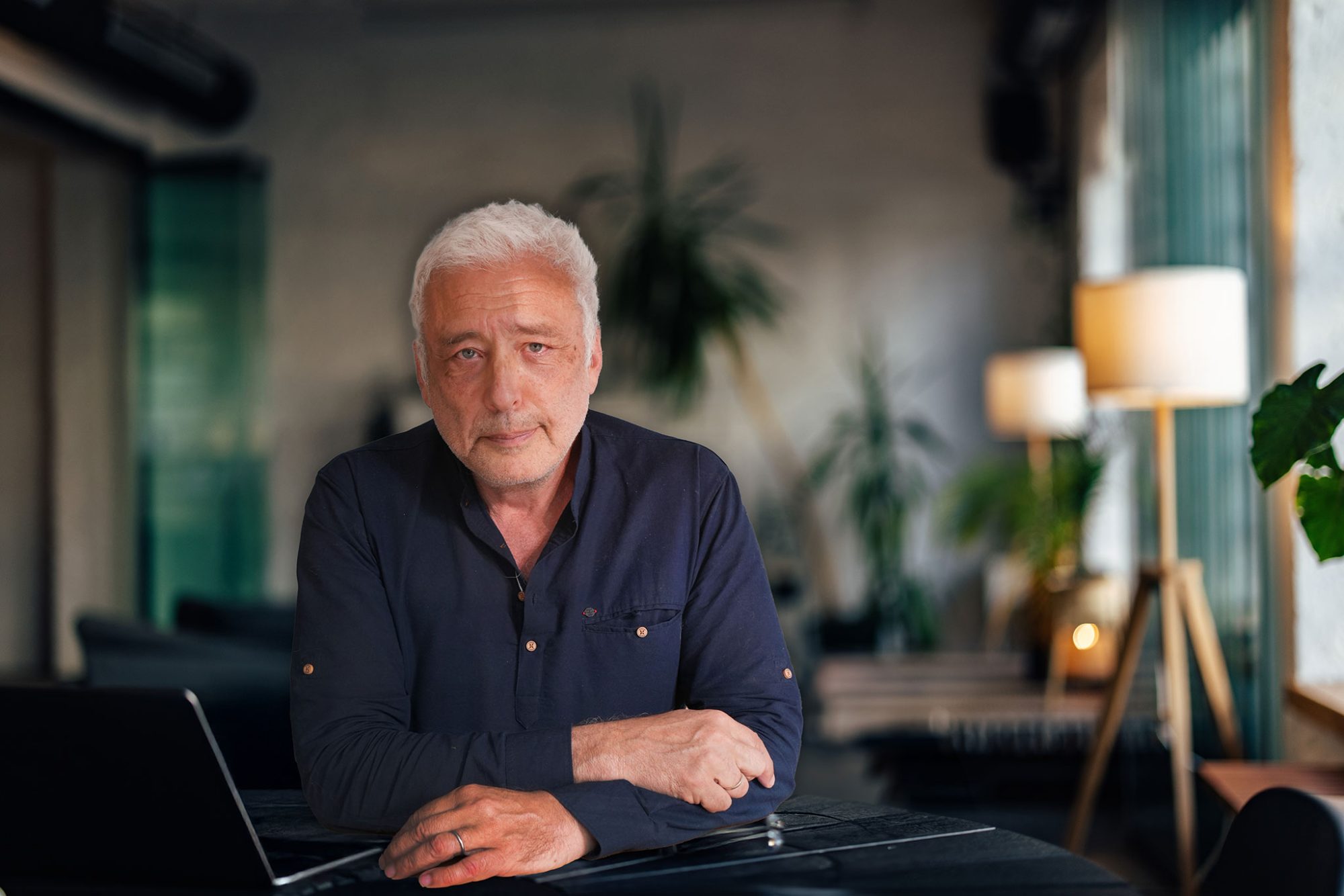
Dr Edouard Broussalian
When healing becomes an act of rebellion
A lifelong commitment.
Édouard Broussalian, born in 1962, is a passionate homeopathic doctor. At the age of 15, he studied the Organon and Kent’s Repertory on his own; he went on to study medicine at the University of Grenoble, benefiting from the experience of his father Georges, himself a doctor and a direct pupil of Dr Pierre Schmidt – a master homeopath from Geneva, who had travelled to the USA as early as 1922 to study with Kent’s disciples. A pioneer in his field, he created the first repertory software programme (Mélanie) in 1977, followed by the Planète Homéo training website in 1996, which fostered a vibrant community but produced few genuine homeopaths. He decided to record his teaching to develop a rigorous training programme designed to teach homeopathy as it ought to be taught, and to make Hahnemann’s philosophy accessible to as many people as possible. All that remained was for him to draw on his hundreds of hours of lectures to restructure the entire curriculum and establish the IHS, with the aim of passing on a form of homeopathy faithful to the Organon – one that is rigorous and profoundly human. A direct and committed teacher, he fights against neglect and commercialisation, and campaigns for a form of medicine that serves life. His mentors and friends — Little, Saine, Master, Vithoulkas — have shaped his rigorous approach. In the field, whether in Haiti, Morocco or Madagascar, he provides emergency care, convinced that true medicine is an act of love and service. Through the IHS, he is training a new generation of independent and committed practitioners.
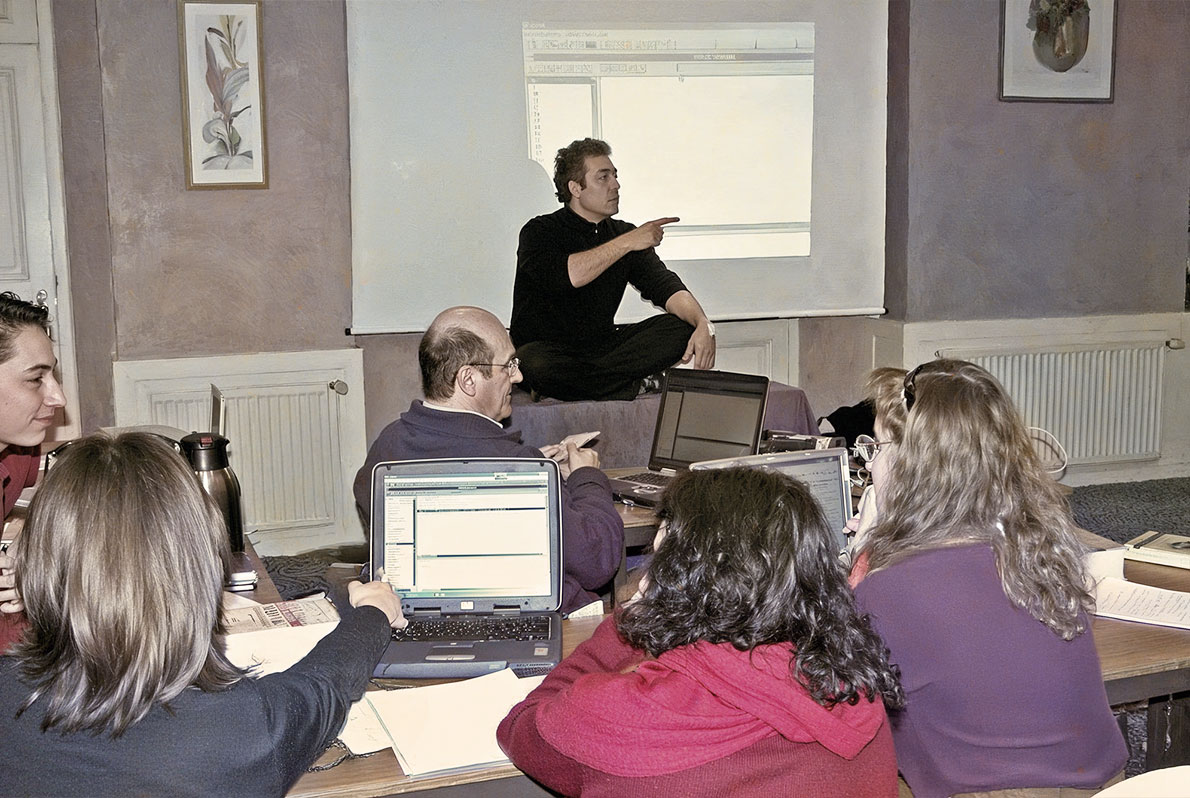
Teaching since 1996
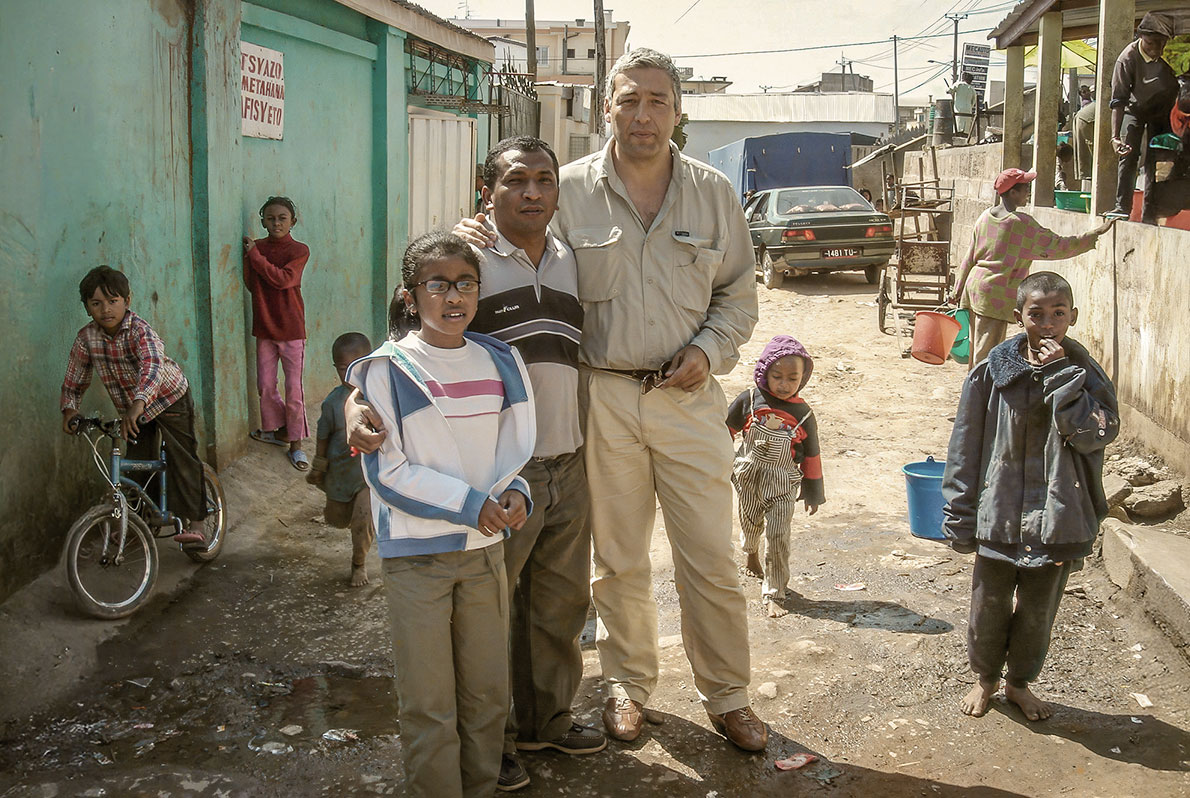
Madagascar in 2005
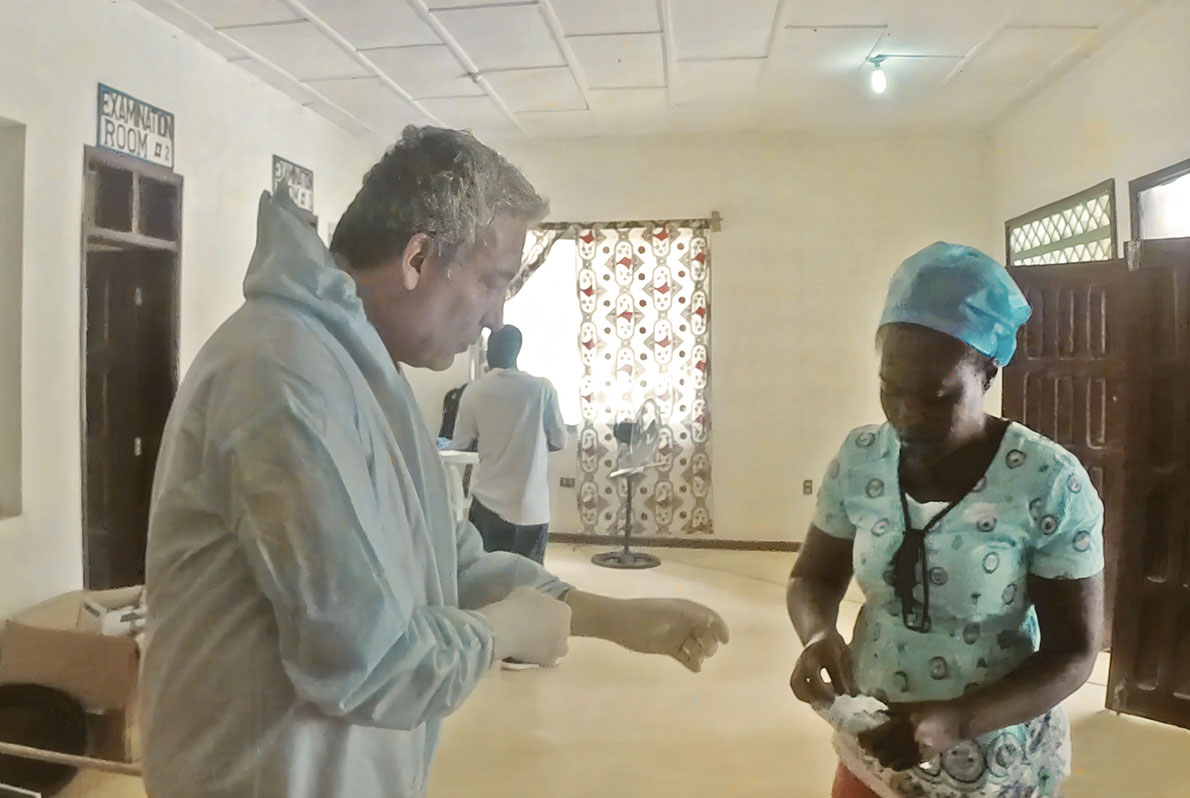
Liberia during the 2014 Ebola outbreak
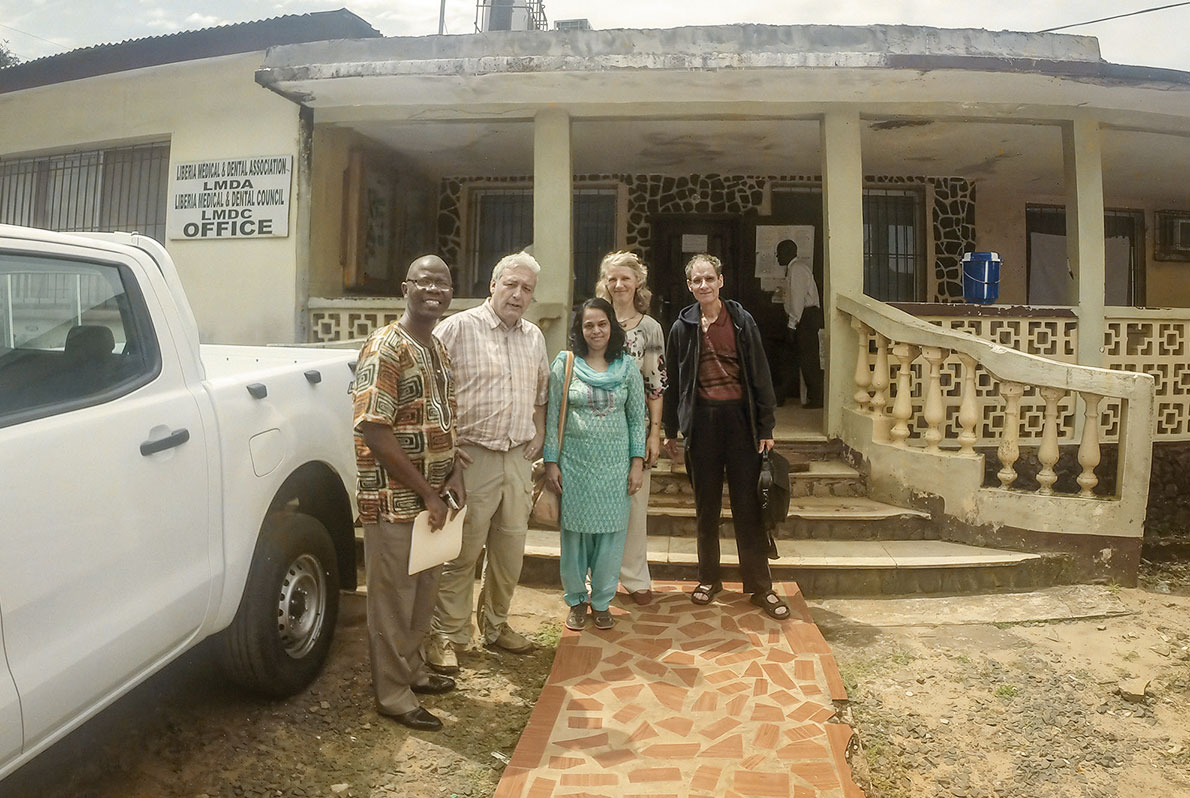
Liberia during the 2014 Ebola outbreak
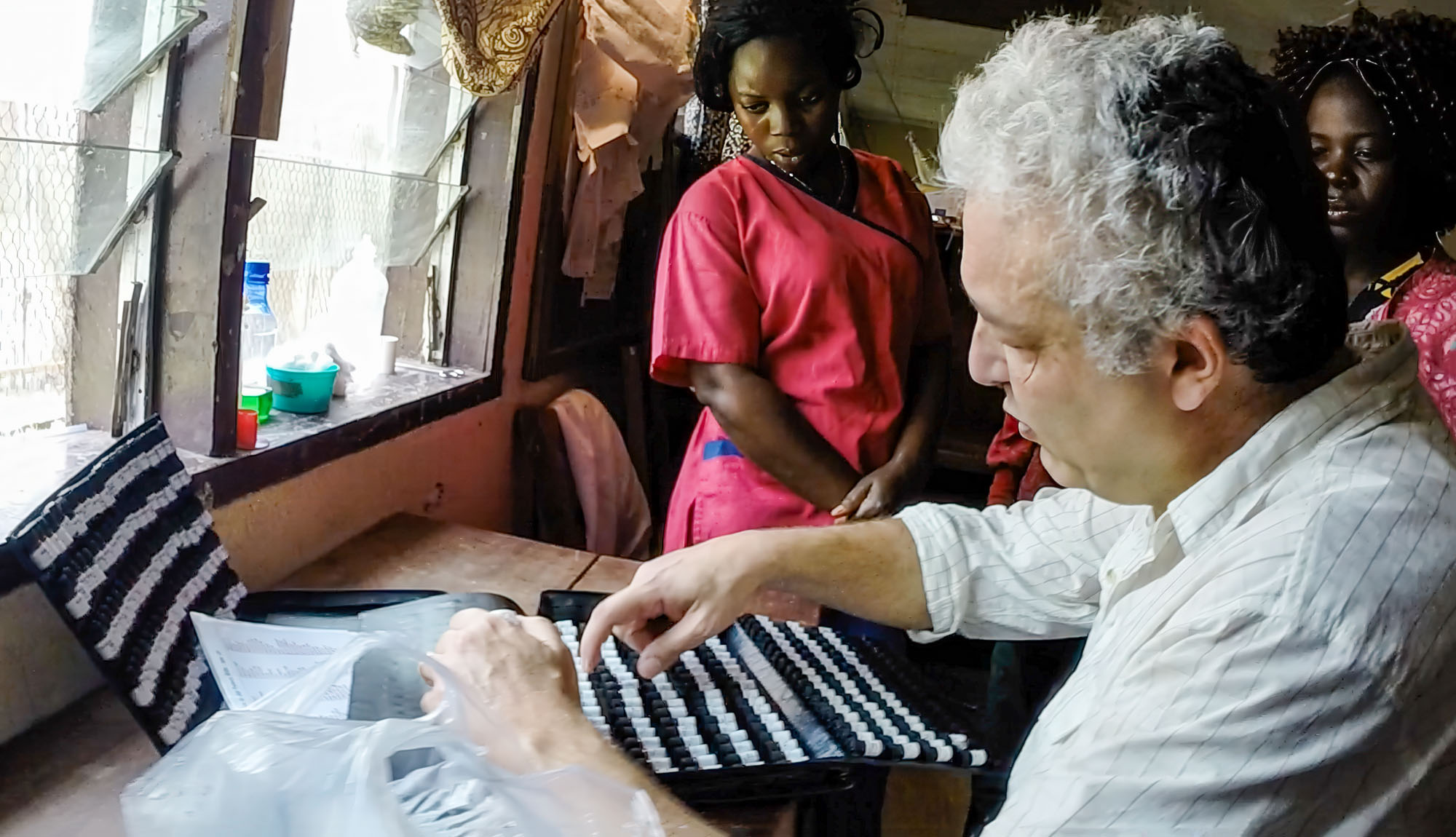
Haiti during the 2013 cholera outbreak
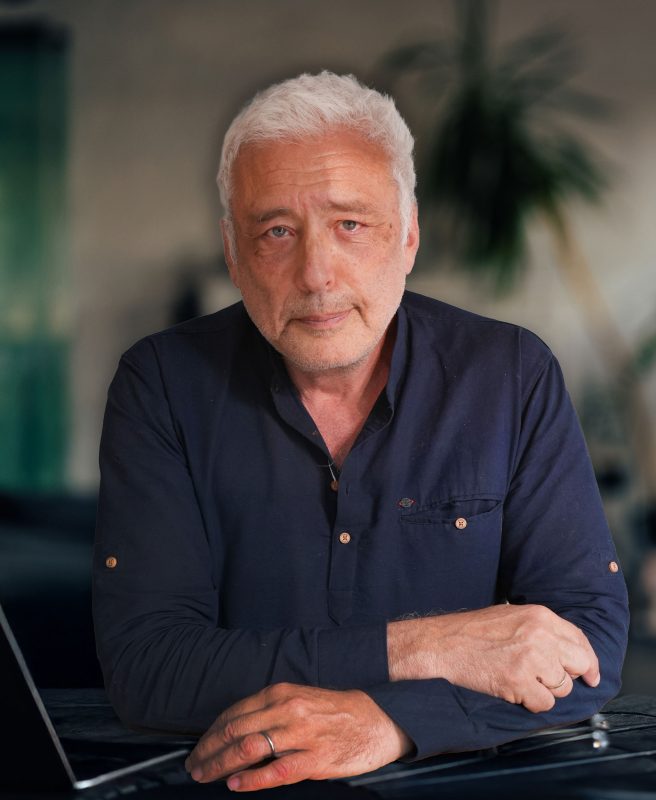
Who is Dr Édouard Broussalian really?
Portrait of an independent doctor, a pioneer of modern homeopathy
You seem much younger than your writing would suggest. Why is there such a discrepancy?
(Laughs) It’s true, people often think I’m 20 years older when they read my writings! I was born in 1962, but I started practising homeopathy at the age of 15, accompanying my father to his lectures. From that time onwards, I became passionate about a form of medicine based on meaning, logic and the laws of nature. It’s no doubt this precocious maturity and my technical language that give the impression I’ve lived several lifetimes.
Your father was a doctor too. Could one say that you were born into the *Organon*?
Absolutely. I grew up in a home where people talked about Kent’s Repertory, punch cards, aphorisms and remedies in the same way that others talk about football. My father, a student of Pierre Schmidt, was a pioneer in Hahnemannian homeopathy. He passed on to me intellectual rigour, a passion for true healing, and a ceaseless quest for coherence. He had this intuition for linking science, spirituality and care — a vision that I am pursuing today through the IHS.
You’re also a pioneer in the use of technology in homeopathy. Tell us about it.
Back in 1977, I set up the programme Mélanie on the Apple II. The idea was to make Kent’s thinking accessible through a computer programme. I wasn’t trying to get «the machine to think for us», but rather to support a nuanced and demanding practice. Then, in 1996, I launched Planet Homeo, an activist platform promoting a vibrant homeopathy. Even today, thousands of French-speaking practitioners are trained through it or draw inspiration from it. It was an act of resistance, but also one of passing on knowledge.
What was the turning point that led you to commit to teaching?
For a long time, I was the only one to uphold this commitment to the Organon. Then I realised that, in order not to betray this science, it was necessary to train, pass on knowledge and nurture. Not to create a school like any other, but a vibrant, demanding community driven by a strong vision. The IHS was born out of this insight: to train practitioners who are independent, clear-thinking and deeply committed.
How would you describe your teaching approach?
I am direct, passionate, and sometimes a little irreverent. But I remain true to a rigorous code of ethics. For me, the *Organon* is a sacred text – not in a dogmatic sense, but as a source of truth. I teach with the humility of a scholar and the fervour of a rebel. My students say that I make the invisible visible. And that I do not merely train them in a method, but in a way of being in the world.
What causes do you champion?
I am fighting against collective amnesia. Against the excesses of the chemical industry. Against dehumanising systems that sacrifice the individual in the name of efficiency. I champion a form of medicine that serves life. A form of homeopathy that is deeply rooted, brilliant, pragmatic, but above all profoundly human. And I continue to be outraged by all forms of denial — from the Armenian genocide to the suffering of children deprived of a parent, right through to the denial of homeopathy by those who do not understand it.
Do you know anyone in the homeopathic community? Who are your contacts?
Less than I’d like, due to a lack of time. But the connections are deep, vibrant and inspiring. I was lucky enough to travel all the way to the source of the Ganges to meet the legendary David Little, a renowned Australian homeopath, probably the most learned and respected of our time. We corresponded for over ten years, between India and across continents. His meticulous and brilliant approach made a deep impression on me.
Then on to Mumbai, in India, where I went to train with the Dr Farokh Jamshed, Master’s degree, one of the pillars of modern Indian homeopathy. This master, professor and outstanding clinician heads the Department of Homeopathy at the CMPH Medical College. Under his guidance, I learnt to navigate the subtleties of chronic miasms and to understand the wisdom behind constitutional remedies. It is always a joy to meet up with him at least once a year, especially as Farokh has now qualified as a specialist in oncology.
Whilst still in Mumbai, I must mention the excellent Dr Gaurang Gaikwad, with whom we share a genuine bond. His knowledge and understanding of materia medica are truly incredible. I believe he is one of the most gifted of his generation.
Every year, I also come across another giant: George Vithoulkas, winner of the Alternative Nobel Prize, leading author, founder of the’International Academy of Classical Homeopathy on the Greek island of Alonissos. Rightly nicknamed “The King of Homeopathy”, he has trained generations of top-calibre students in an atmosphere of rigour and inspiration. He likes to say, not without a touch of humour, that it is “because of me” that so many French people have come to train with him! (And he’s not wrong.)
This contact with students from all over the world has also opened my eyes: beyond our borders, France sometimes has a poor reputation when it comes to homeopathy. Too much improvisation, not enough adherence to the Organon. That is one of the reasons why I founded the IHS.
I also hold the Dr Luc De Schepper, a Belgian-American doctor, a brilliant clinician and a master of the Organon. His clinical approach, with its surgical precision, his teaching skills, his ethics: everything about him inspires me. He is one of the very few who have truly understood, applied and passed on Hahnemannian logic in its purest form. A rare gem, and a man of great compassion. His recent passing was a great loss.
And then there’s the Dr Didier Grandgeorge, author, trainer and homeopathic doctor in Fréjus. I first met him when I was 18, whilst I was showing him round my small astronomical set-up. Since then, we have remained in constant contact, and I regularly visit his school to take part in his seminars, which are rich in meaning and shared learning.
You’ve never wanted to confine yourself to doctors’ surgeries or conferences… What prompted you to take homeopathy to the most vulnerable areas, right at the heart of humanitarian emergencies?
Beyond lecture theatres, books and conferences, I have always wanted medicine to be embodied where it is most vital: out in the field, at the heart of reality, amidst the dust and the urgency. And so I have journeyed alongside some admirable people, my companions in adventure and in our mission.
First and foremost, I’m thinking of my lifelong friend, the Dr Frédéric Rérolle, Chairman of Homeopaths Without Borders – France, a tireless champion of practical, humanistic, rigorous and accessible homeopathy. Together, we have travelled through many countries, arm in arm with our remedies, our faith and our battered suitcases.
It was he who introduced me to Isabelle Rossi, founder of the’APMH (Association for the Promotion of Homeopathic Medicine), a woman of gentle yet formidable strength, a quiet pillar of support for numerous humanitarian projects, particularly in Morocco at the centre in Skoura, where homeopathy has taken root thanks to their tireless efforts.
And then there was Haiti, that scarred land that I will never forget. It was after the earthquake. Over there, amidst the rubble, with the Dr Kaviraj – a renowned Dutch homeopath and leading specialist in agro-homeopathy – we treated dozens of people suffering from cholera on the streets, in the midst of the crisis. The remarkable Canadian homeopath, Catherine Saby was part of the trip and played a huge part in the expedition’s success. Within half a day, the fevers had subsided and smiles had returned. It was deeply moving. Kaviraj’s death was a heavy blow. He will forever remain a kindred spirit.
In 2011, I returned to Port-au-Prince thanks to the invaluable support of two local figures: the Dr Jean-Marie Caïdor, a Haitian doctor trained in homeopathy, and the Dr Thomas Hans-Muller, affectionately known as «Boule», a man of action, warm-hearted and visionary. They gave me a warm welcome. Together with them, I was able to continue demonstrating the power of homeopathy in a health crisis.
These experiences have profoundly transformed me. They have reminded me that medicine is neither a status nor a body of knowledge, but a service. A form of love in action. It was amidst the dust of Haiti, in the narrow streets of Skoura and in the clinics of Madagascar that I discovered the true meaning of the word to heal.
You often speak about your pupils with great emotion…
Yes, because they are the ones who will carry the torch forward. The IHS attracts brilliant, curious and passionate individuals. We are training a new generation of healthcare professionals, equipped with a scientific mindset but grounded in a meaningful approach to medicine. I believe deeply in their power to bring about change. And some go on to become teachers, researchers or leading figures in their own right. That is the finest legacy of all.
You also have a strong commitment to humanitarian work. What does working on the ground mean to you?
Everything. I’ve provided medical care on the streets of Haiti after the earthquake, in India, Madagascar, Turkey… Homeopathy demonstrates its power there with astonishing clarity. That is why we are launching a field programme for the best students at the IHS. Each mission becomes a rite of passage, a living laboratory, a testament to the universality of this form of medicine.
A final word for those who are still unsure about joining you?
Don’t look for a comfortable school. Look for a school that transforms you. The IHS is not just a course: it is a calling. A calling to embark on an intellectual, medical and human adventure, in the service of life. I have dedicated my life to it. If this resonates with you, then welcome aboard.