
The Fatal Drift
Over 30 years’ experience across the globe has shown Edouard BROUSSALIAN that there is no point in teaching homeopathy as a technique, prescribing remedies, introducing students to Kent’s Repertory, let alone studying the properties of remedies, without first having mastered the Organon. With each successive simplification, the standard of teaching has steadily declined over several generations. Proof of this is the deplorable state of the profession, where, for want of proper training, practitioners are turning to increasingly far-fetched systems that bear little resemblance to homeopathy other than in name. Because of conceptual straitjackets or arbitrary interpretative frameworks, these unfortunate individuals consistently fail where our first-year students often succeed at the first attempt.
We are currently a long way from the results achieved by our pioneers, who treated even the most serious illnesses (pneumonia, yellow fever, cholera, meningitis, etc.) with a success rate of nearly 100%. Too many self-styled homeopaths, who sometimes enjoy great success, are barely capable of treating a cold sore but have no idea of homeopathy’s true potential. Having failed to study the 291 aphorisms of the Organon in detail, they know little or nothing of the fundamental rules governing prescription and case management. The standard of homeopaths has declined from one generation to the next because teachers have continually simplified and summarised Hahnemann’s masterful discoveries to the point of virtually stripping thestudy of homeopathy and turning it into a sort of alternative medicine devoted to treating minor ailments.
Our school breaks this vicious circle of just a few weekends’ training each month by offering you over 500 hours of lesson online (as it takes at least 150 hours to begin to grasp the basics) to realise that homeopathy describes the only logical way of administering medicines to patients.
We want to put a stop to this downward spiral of mediocrity because illness, whether acute or chronic, shows no mercy, and because human lives depend on our progress. That is why the training of future practitioners, whatever their original background (doctors, vets, dentists, pharmacists, engineers, teachers, midwives, physiotherapists), is not open to compromise.
It has been proven that teaching based on the *Organon* shapes students’ minds, enabling them to develop independence, observational skills and critical thinking – in short, the scientific method. This course, regarded by most as superfluous, off-putting or outdated, actually saves students a huge amount of time.
Should we put up with just anything?
This decline has given rise to a multitude of disparate practices, carried out in the name of so-called tolerance of others’ opinions. This serves to further discredit homeopathy. In short, all it would take to become a homeopath is to hand out a tube of granules amidst a jumble of other things, as if simply prescribing a medicine were enough to make one a doctor.
This teeming jungle is merely a reflection of the critical lack of training amongst prescribers, who view homeopathy as a ‘super placebo’ for some, a spiritual key for others – and we’ll spare you a long list of more or less delusional misinterpretations that border on quackery. It is true that too few doctors are driven by a genuine calling to heal, and that many prefer the simplicity of protocols (that is to say, recipes) to scientific study, which requires time, dedication and courage. As Plato says: one cannot blame a child for being afraid of the dark; on the other hand, it is harder to forgive an adult who is afraid of the light.
We are therefore simply calling for a measure of humility, asking prescribers to begin by mastering the basics of homeopathy before embarking on all manner of futile endeavours, given their failure to achieve clinical results. Apparently, in the field of medicine, few people are capable of heeding such a call to adopt the mindset of a complete beginner in any other branch of science.
All physicists, all chemists, all mathematicians and all astronomers study the work of the pioneers in their respective fields before hoping to make further progress. This truism seems to be largely ignored in medicine.
A return to one’s roots
Who discovered homeopathy? A genius, Dr Samuel Hahnemann, through 55 years of tireless experimentation and reflection. He claimed to have discovered a universal law of healing? Why not study what he has to say, given that he laid the foundations for applying this law and endured all manner of persecution to pass on his legacy to us? What? Are we really mad enough to find any value in a medical book from 1843, when the shelf life of a modern medical article is no more than a few years? Yet the Principia Newton’s writings from 1687 have not aged a bit in three centuries.
The fact is, what we are looking for are medical laws capable of ensuring that prescriptions are infallible at all times, in all places, and for all patients. These are universal and timeless laws, whereas conventional medicine, which purports to be scientific, offers nothing but trends dictated by the industry.
Our legitimacy, beyond the current turmoil, stems from our exhaustive study of the fundamentals, that is to say, the 6th Organon.
History of the school
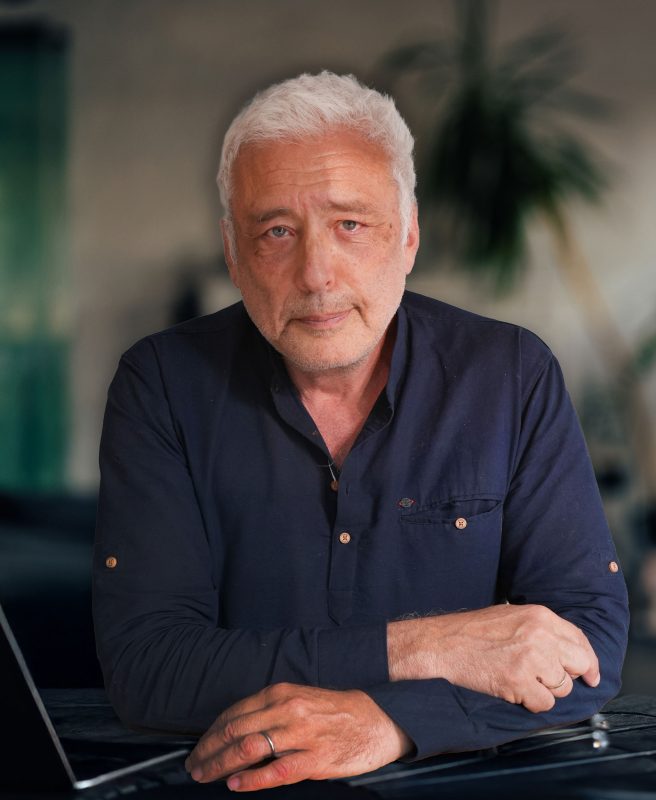
Planète Homéopathie, founded in 1996 by Dr Edouard BROUSSALIAN and his students – including Drs Jean-Claude Ravalard and Corinne Bendayan – was already undisputedly the leading French-language school of homeopathy, with hundreds of articles available and a large forum. It was there that, year after year, he shared his teaching, his writings and his experience.
From 2012 onwards, a major shift took place. Dr Broussalian realised that the voluntary teaching that had been provided in Lyon up to that point was of no use. Whilst there was no shortage of people attending his lectures on materia medica or his live clinical case studies, in reality very few of his audience truly understood homeopathy and its demand for perfection. Too many remained at a superficial level, not to say were mere dilettantes. Very few understood that there is no other way to administer remedies.
It then took more than ten years of development to design and implement a highly structured curriculum, with the support of PH alumni. This led to the founding of the International Homeopathic School in 2025, which follows in the footsteps of PH but is open to the whole world.
With branches on every continent, it is also probably one of the few schools where homeopathy is taught with such rigour and clarity, with a compulsory core of over 150 hours devoted to a comprehensive study of Hahnemann’s 6th Organon, aphorism by aphorism, all of which is extensively expanded upon and annotated.
Who is this training course aimed at?
Level 1 – The Fundamentals – is open to anyone keen to understand true homeopathy and to apply it in their own lives, within their family circle or amongst their loved ones, whilst moving away from the misleading information often conveyed by the media. One must be trained – and thoroughly trained – to develop a sharp critical mind capable of identifying the many distortions or gross oversimplifications of homeopathy that are circulated without the essential foundations needed to assess their validity having been mastered.
Levels 2 – The Clinician and 3 – The Practitioner are open to those who aspire to become masters in the art of healing (healthcare professionals: doctors, dentists, midwives, vets, pharmacists, nurses, etc.)
Medical students are more than welcome to learn homeopathy quickly and break free from the industry’s chemical paradigm as soon as possible.
Those who have already undergone training in homeopathy will realise that the fundamentals of the *Organon* will enable them to treat and heal patients more effectively and to significantly improve their outcomes.
The online format
You’ll benefit from clear, rigorous teaching that remains faithful to the *Organon*, delivered in a flexible online format and in very high resolution, tailored to non-medical professionals. The workload is substantial, but you’ll be able to progress at your own pace. The school fosters the creation of an online community, making the learning experience even more engaging.
With several decades of teaching experience under his belt, Dr Broussalian sets out a teaching plan that is approachable yet rigorous. When everyone asks for materia medica, he replies, ‘No! What is needed first is to learn how to learn and how to think, then to learn how to observe, and only then to discover the materia medica.’
The Master’s Programme in Homeopathy is therefore divided into three parts:
- The Fundamentals, where the student learns how to learn by following the developments of the genius that was Hahnemann.
- The level Clinician : the weather to learn to observe has been introduced. 80 hours of clinical case studies with commentary form the backbone of the course.
- The level Practitioner : only now can you really understanding materia medica and study it. 150 hours will be devoted to this.
With a schedule tailored to each stage of the course, Dr Broussalian organises webinars to stay in touch with everyone and gain a clear understanding of the students’ needs. He responds to, reassures and supports each student to help them manage common fears: the fear of not being able to cure enough patients, the fear of not mastering homeopathy, of making mistakes, of bringing the discipline into disrepute, and the fear of stagnating or forgetting what they have learnt. The school’s role is to turn each student into a true Jedi who will, in turn, spread the New Medicine. This requires courage, intelligence and honesty.
Practising Homeopathy
With regard to the practice of homeopathy, we recommend that you consult the legislation in force in the country where you intend to practise.