


Treat the patient, and you will heal any organ!
or how to emphasise the symptoms so that the homeopathic principle is sufficiently met.
By Dr Edouard Broussalian
- Introduction: the patient
- The Like-Minded
- The concept of homeopathic potency
- Classification of symptoms
- Classifying symptoms
- Common signs or characteristics
- It’s your turn!
Introduction: the patient
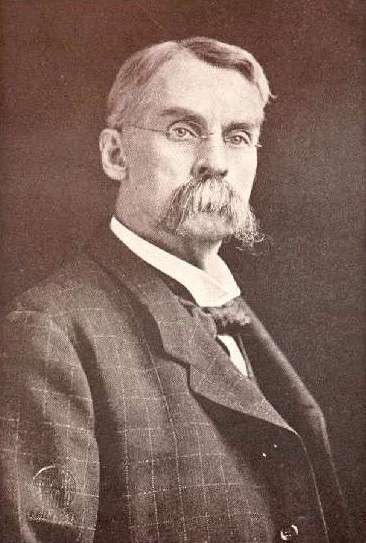
Here is a maxim from Hahnemann, which Kent drummed into his students, and which perfectly sums up the homeopathic approach (and which should also be the approach of any self-respecting doctor who does not wish to see their role reduced to that of a mere dispenser of medicines).
Treat the patient : what does that mean? Traditional medicine can shed some light on this. Take a child who suffers from ear infections all winter long. Each ear infection will be treated with the very latest, most fashionable arsenal of treatments: the newest antibiotic, the most effective anti-inflammatory, and a few drops in the ear if necessary. Then, on closer inspection, the specialist will suggest removing the adenoids, which undoubtedly play a disruptive mechanical role. Whilst his ears are being treated, other specialists will also treat his skin condition, as the child also suffers from eczema. What’s more, this restless little lad has the greatest difficulty falling asleep, so he’ll need additional treatment to help him sleep. If we continue with the investigations, tests will certainly reveal an allergy to one or more allergens, which is bound to be a bonanza for allergists and pharmaceutical companies, as our little patient will also need to be treated for this. A caricature, you might say? Not at all, because the example I’ve given is our daily reality and illustrates very well the specious reasoning drummed into us at medical school, which consists of treating the diseases, but not the patients.
It has to be said that we get a real telling-off every time a mother brings her child in and has the good sense to say to us: «I’m giving up on everything; we need to find a medicine to treat my child; he must be really ill all over for us to have to go through all this». Yes indeed, these mothers’ common sense must be preserved by the absence of those huge blinders that are academic qualifications; they don’t let the trees obscure the forest, and they intuitively grasp the obvious: the whole organism must be disrupted so that each of its parts, poorly regulated, can begin to fail and show symptoms.
It is therefore clear thatThrough every ailing part, it is the whole that expresses itself. It therefore also becomes clear that conventional medicine invents the illusions it claims to treat: let us not forget that suffering belongs to the patient and that it is doctors who have systematised this into diseases. In other words, illness is a purely intellectual invention of medicine, which consists of labelling a group of symptoms common to all patients as if this syndrome existed as a virtual entity floating in the void. Here we are at the height of Claude Bernard’s line of reasoning, which has certainly enabled us to make immense progress in physiology but which is also responsible for our greatest errors; would it not be good if, at last, after an excess of analysis, we were to return to synthesis? Need we remind ourselves that a single primordial cell eventually divided into billions of other cells, and that these organised themselves into organs through a process that is entirely beyond our understanding? Need we remind ourselves that there must therefore be a general regulatory mechanism, a sort of conductor who ensures the harmony of the whole, not only during its formation but also in its day-to-day maintenance? Can we even begin to grasp the staggering complexity of this mechanism, which ensures, every second, that all cells function harmoniously so that physiological functions are maintained and, amongst other things, no abnormal tissue develops? The little we know about physiology does not prevent conventional medicine from blithely interfering with the help of a few drugs. Consequently, and in the complete absence of laws to guide prescribing, «progress» consists of denouncing past mistakes whilst committing those that will be denounced in the future…
So, to return to our little patient, what, for example, does conventional medicine do about his intense fear of the dark or of thunderstorms, his sweating from head to toe to the point of soaking his pillow, the fact that he adds loads of salt to his food, his teeth-grinding whilst he sleeps, or his stubborn constipation with enormous stools that block the toilet? Answer: nothing, absolutely nothing. As these symptoms do not feature in the catalogue of any disease, we assume the right to ignore them completely. This is an artificial attitude that ultimately costs our patients and society dearly (a society which, incidentally, no longer seems to be able to afford it).
To sum up : the patient behaves like a black box whose inner workings we will never be able to fully understand. It must be acknowledged that the patient behaves as a whole, and that any disruption to this whole produces symptoms that are perceptible to us. Since we are unable to fathom the infinite complexity of the internal mechanisms at work, all that remains for us is to study the personal characteristics of each patient as they interact with their environment; characteristics which, in their own way, express the ’inner self«.
The Like-Minded
‘All right,’ you might say, ‘but how are we any further forward now? How…’ process The patient? This is where the principle of ‘like cures like’ comes into play, underpinned by experiments on healthy subjects.
I do not intend to give a historical account of the discovery and formulation of the principle like cures like as Hahnemann pointed out, we shall therefore bear in mind one simple fact: when a substance cures a symptom in a patient, experience shows that that substance is capable of inducing the symptom it has cured. This fact has been amply demonstrated over the past two centuries, and indeed, as they are unable to disprove it, critics of homeopathy now focus solely on the issue of dilutions; let them have that bone to gnaw on.
Let us return to the subject of similar conditions: it is therefore as though two disorders that are similar in their manifestations could destroy one another. I am, of course, not using the term ‘disease’, which is too restrictive, as this is indeed a disorder characterised by a set of symptoms in everything the body. Just look at the pragmatism of Hahnemann’s approach: we do not know how The body is out of balance; nor can we know exactly how a drug disrupts the body’s functioning, but that does not matter, as these disorders can be characterised by the totality of their symptoms.
This leads to another fundamental principle: drug trials must be carried out on a healthy organism in order to identify the disturbances caused by the drug. Furthermore, the vast body of experimental data accumulated over more than two hundred years also shows us that any drug disrupts the entire organism, thereby confirming our ‘black box’ reasoning. Out of Christian charity, I shall therefore not even broach the subject of polypharmacy; at this stage, everyone will have seen just how untenable this position is…
Experimentation on healthy subjects will be one of the stumbling blocks that will lead us to assess the symptoms : poisoning has never been allowed to progress to the point where lesions (ulcers, necrosis, etc.) appear. Therefore, by definition, the rubrics in the Repertory relating to objective or lesion-related signs are incomplete, and for the most part do not stem from pathogenetic sources but from observations of recoveries among patients (which is, after all, a fine example of the complementarity of the two approaches – clinical and pathogenetic).
If all medicines had been tested on thousands of subjects over many years, the body of data at our disposal would be such that the concept of symptom evaluation would no longer even arise: the doctor would simply have to list the symptoms to identify the appropriate remedy. We are, of course, a long way from that!
However, if we combine the principle of similars with that of viewing the patient as a whole, we arrive at a fundamental rule: to bring about a cure, we must find a remedy that bears a resemblance to the patient’s symptoms. This approach therefore leads us to classify symptoms into two main categories: general which apply to the patient and therefore to all parts of the body, premises which depict only the affected part and which, moreover, may contradict the general symptoms. Another rule follows from this, which Kent expresses very well: the closer we get to the organs, the further we move away from the patient themselves ; which is not to say that local signs should be overlooked – otherwise it would have saved Kent many years of hard work when he set about compiling the Repertoire…
To sum up : the fragility of experimental evidence leads us to consider that a sensation carries greater weight than an objective sign or lesion. Furthermore, our holistic approach to the patient leads us to regard signs correlated with the patient themselves as very important; whilst those correlated with specific parts of the body are certainly representative of the whole in their own way, they are of less value in guiding us towards the «right» remedy.
The concept of homeopathic potency
I shall now turn to the concept of «quantity» or threshold of resemblance, which Granier defined using the term homeopathic nature. The greater this similarity, the more closely the remedy resembles the patient in the symptoms it is capable of producing.
Once a certain threshold of homeopathic potency is reached, a sufficient resemblance is achieved for the patient to «respond» to the dose. Of course, this threshold varies and is rather unpredictable. Sometimes it is quite low, and you will see patients develop a whole range of pathogenetic symptoms following administration; at other times, it is very high, and only the correct, specific remedy will elicit a reaction.
Let’s take a specific example to illustrate these rather abstract concepts:
An adult woman suffers from dysmenorrhoea and chronic knee pain.
She takes Colocynthis during her period because of the following symptoms: abdominal pain, < before her period, forcing her to double over.
Furthermore, her knee is always relieved by Rhus tox., which was prescribed because of: knee pain > on movement, < in damp weather.
But his symptoms keep returning: his condition remains essentially unchanged, and the prescriber has ultimately achieved no more than allopathic medicine, namely providing relief on a case-by-case basis. What is the reason for this? Because Rhus has good homeopathic affinity with regard to the knee symptoms, it can provide relief; the same applies to Colocynthis with regard to the abdominal symptoms. But the result clearly shows that neither of the two remedies possesses sufficient homeopathic affinity with regard to the sick to provide him with long-term relief.
So, if we take a step back, we will realise, for example, that the patient:
- Never gets thirsty.
- A horror of fat.
- She feels the cold, but can’t stand the heating in the car.
- Experiences a < general before her period (feels sad, cries, etc.).
How could one fail to recognise Pulsatilla? And now that we are considering Puls., we will realise that it even covers the local symptoms, except for knee pain < in damp weather. This objection would, in any case, be insufficient on its own to rule out Puls. Especially as, in fact, the Repertory tells us that Puls. exhibits a general aggravation in damp weather.
Experience thus shows us that we must «look beyond» the organs in order to perceive the patient. Thirst is regulated by the central nervous system, which is itself the hub of countless pieces of information. Which organ controls an aversion to fatty foods? Which part of our patient is affected by the cold, if not the patient herself? The patient’s entire condition is affected by the onset of her period.
To sum up : To achieve a cure, we must find a remedy that is highly homeopathically compatible with the patient’s symptoms, and only by thoroughly assessing the symptoms can we determine which ones correspond to the patient themselves.
Classification of symptoms
We now need to set out in formal terms what we have just stated.
The general signs are those that affect the patient as a whole. They are divided into:
signs mental, which can in turn be broken down into disorders of:
the will : Without going into detail here about the concept of the «man of desire», it is important to bear in mind that, through desires, aversions and fears, we are, in essence, touching upon the very core of the human being.
the understanding : this category of mental disorders is less severe; it encompasses all the patient’s misperceptions regarding their environment and themselves (illusions, delusions, etc.).
the memory : Everyone will have noticed irregularities in their memory, and everyone suspects that these signs are of little significance precisely because they occur so frequently.
signs mental and physical : the sexual sphere, as well as signs relating to food cravings and aversions; the value of these signs is often inestimable, for unlike other purely mental signs—which can consequently be interpreted in various ways—the patient’s own family and friends can confirm their existence and intensity.
signs general physics (reactions to heat, cold, menstruation, movement, pressure, vertigo); in short: everything that affects the patient as a whole and that can be objectively observed.
The appearance and nature of the discharges : At first glance, you might say, this is merely a local sign; yes, but the nature of the discharge – or, for that matter, of the healing process – reflects, in its own way, a set of general processes that affect the patient as a whole.
The local signs At the bottom of the hierarchy are those that relate solely to the body parts; pathological symptoms, of course, are also included amongst them. Headache, knee inflammation, flatulence, etc. In most cases, these signs will be useful if they are modalised.
Classify a symptom
We have just said that the symptoms, which are mainly localised, are best modalised. Yet another neologism… but it’s necessary!
To understand its meaning, we need to refer back to Hering’s famous cross: it enables us to classify a symptom according to the following scheme:
Terms and Conditions · Concomitant Conditions
You can keep looking, but there is no other way to define a symptom. In other words, once the location and sensation have been defined (that is your local symptom), how else can you characterise it other than by means of a modality (or a concomitant, which is much rarer)? So the guiding principle is simple: find out the details.
I can assure you that, in the absence of any particular sensation, a clearly defined modality is worth its weight in gold. Under these circumstances, there is no need to even mention the value of a modality-based mental symptom! How often have contrasting modalities helped to distinguish between remedies? This is the prime focus of PCKent’s differential diagnosis.
But in fact, if this concept of modality leads us to consider that some symptoms can become characteristic, it is also because others are common! As you will have realised, the classification into mental, general and local signs that we have just looked at must be qualified depending on whether the symptom is common or characteristic.
Common signs or characteristics
Symptoms common may be so either because:
Symptoms common to all patients: a sore throat, redness and inflammation in cases of tonsillitis. This means that you have to be a doctor to practise homeopathy, because otherwise how would you know the common signs of illnesses? Kent repeatedly emphasises that one must know the normal to detect the anomaly.
Common to many remedies: nausea, headache, fears, delusions.
Consequently, a useful mental symptom loses its value if it is simply (I was going to say ‘silly’) common: the ‘Sadness’ section, with its 250 remedies, cannot under any circumstances be used to rule out remedies. If they are not eliminators, these common symptoms are nevertheless « confirmers » (or « nurses ») : once you have decided on a remedy, it will be pleasing to find it listed in the section; on the other hand, if your patient is feeling sad and the prescribed remedy does not even feature amongst the quarter of a thousand candidates, then there must be something amiss somewhere…
Symptoms features may also affect any symptom, whether mental, general or localised. Through one of the possibilities presented by Hering’s cross, a common sign may become characteristic: an unusual modality, a rare location (or a particular radiation of pain), or a strange sensation.
Examples: a headache with no further details is classified as zero; if it occurs periodically every week, it becomes more characteristic. If it alternates with toothache, or if it radiates to the chin, it becomes a rare characteristic sign.
Nausea on its own isn’t enough to help you choose a remedy. If it occurs after eating, this is always common, but it’s more helpful because it’s specific. If it occurs after eating fruit, it becomes a distinctive symptom. If it occurs during intimate caresses, it’s downright odd and strange; you really mustn’t overlook the remedies in this section.
But now, be careful not to fall into the classic «keynote» trap, as the Americans say. What’s the matter? Let’s say your patient is feeling melancholic and you notice that their eyes are always closed. You’ll rush to PCKent to look up the symptom, which does indeed exist:
Eyes closed, lost in melancholy: Arg-n.
This is all the more telling given that Argentum stands alone in the third degree and, to top it all, has a monstrous relative valuation as it is absent from the general index. Bingo! All that remains is to prescribe Argentum… and risk going off the rails!
Am I a killjoy? Yes, but before awarding Argentum, we still needed to make sure it covered the remains of the case, and at the very least that there are no general signs contradicting it. Otherwise, at best, your patient is likely to remain melancholic, albeit with their eyes open; which may not constitute real progress.
So: these rare and unusual symptoms are highly characteristic and often provide a shortcut to the remedy, but the rest of the case must always be consistent with them. Remember that, by definition, the lists in the Repertory are incomplete!
To wrap up this important point, imagine that our job is to draw up a composite sketch of the medicine to be prescribed. Our suspect is a man or a woman, with brown or fair hair: all these characteristics are worthless because they are far too common. Now, you learn that the suspect is one-armed: you won’t even need the rest of the description to pick out the right candidates from your database. You might even know of only one. That’s precisely why you should be wary, because your database is incomplete.
It’s your turn!
You become a homeopath on the day you manage to rise above the purely local level and gain the necessary perspective to see the patient as a whole.
Now, and this is precisely the aim of our practical seminars, all that remains is to get on with the work. See as many cases as possible. Don’t worry if you get loads wrong at first: that’s normal and a good sign; it’s all part of learning the trade, and patients won’t hesitate to place their trust in someone capable of admitting when they’ve made a mistake. Every mistake will teach you which symptom you’ve overestimated and which one you’ve underestimated, and you’ll gain a deeper understanding of the significance of symptoms!
You will continue to note down the general or local symptoms that the patient presents to you. Goodness me, those are precisely the ones they want to see disappear! But in fact, you will be on the lookout for the first characteristic symptom that the patient presents to you. That is always the place to start. Once you’ve identified that, all that remains is to steer the questioning in such a way as to quickly rule out other possibilities and pinpoint the correct remedy.