

Correspondence between Organs, and the Pathway to Recovery
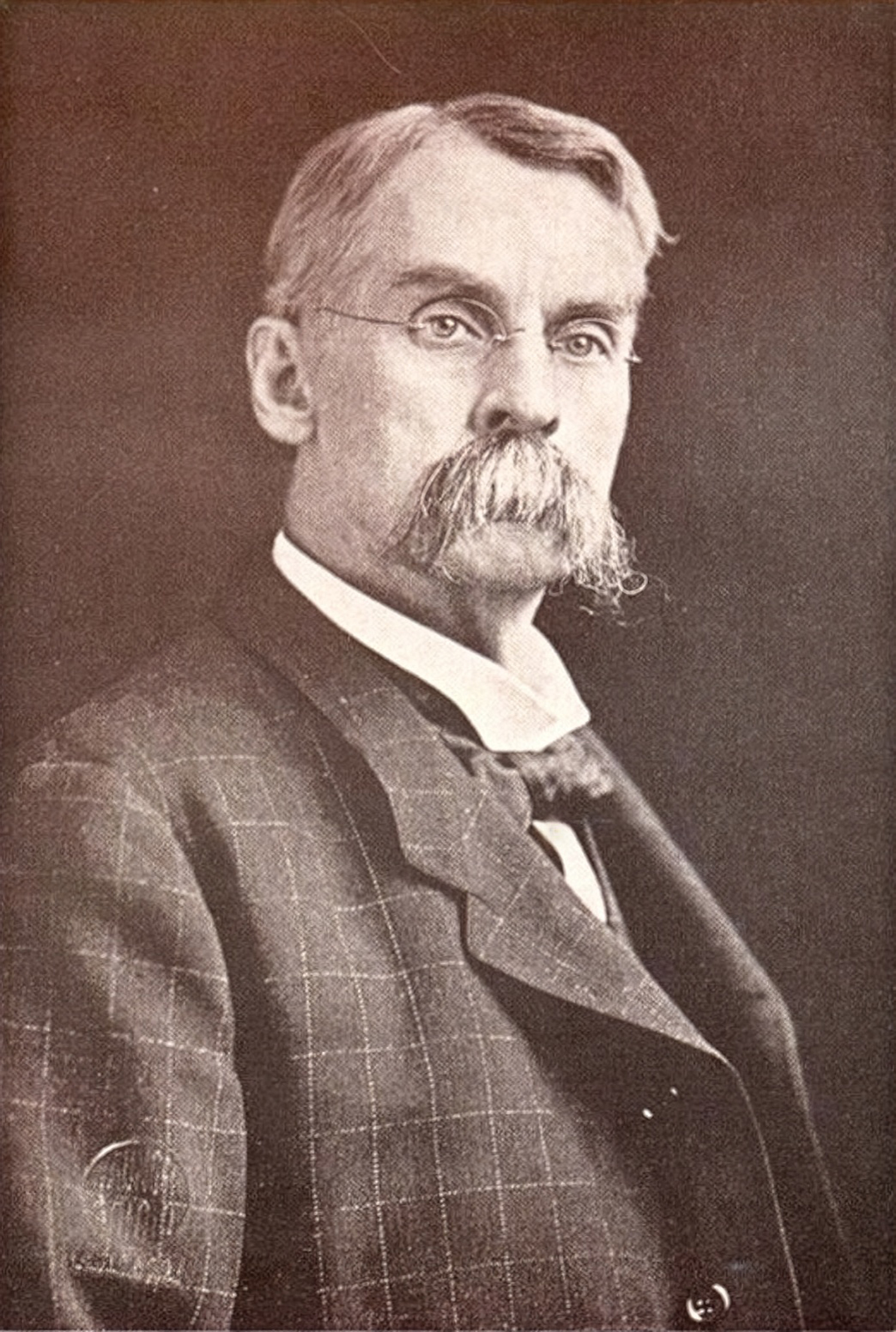
Transactions of the Society of Homoeopathicians, 1911, pp. 31–33.
Literal translation by Édouard Broussalian.
Rewritten by Camille Genton.
Translator’s Preface.
All our readers know that our website is dedicated to the Hahnemannian approach to homeopathy, characterised by its pragmatism and based on experimentation: ‘enough of theories; people must be treated according to clear and intelligible principles’. I have no doubt that some will be ‘shocked’ by the philosophical nature of this text. It is my firm belief that we must reconcile the right brain and the left brain. Medicine cannot be reduced to a mere technique, as is all too often the case in hospitals. By focusing so much on treating organs and cells, we lose sight of the human being.
This important text by Dr Kent on organ correspondences, published in French for the first time, goes beyond a simple statement of Hering’s law and offers significant insights into the treatment of chronic diseases. It has been many years since I first read this text and decided to put it to the test in clinical practice. I hope that everyone will do the same to verify the accuracy of the findings reported by Dr Kent. If you use centesimal dilutions, you are unlikely to observe Hering’s law, whereas it is a common occurrence when using high potencies. Better still, you will see for yourselves that these correspondences do exist. Knowing them will save you a great deal of trial and error.
Kent is undoubtedly one of the greatest homeopaths the world has ever known. Drs Kent, Hering and Farrington, to name but a few, were followers of Swedenborg. And given their genius, I believe we ought to pay particular attention to their teachings. The attacks levelled against Dr Kent’s memory—accusing him of having belonged to a sect and claiming that his practice was steeped in its teachings—are shameful. The following text is the only one in which Dr Kent alludes to his religious convictions. A study of his work clearly shows that he always conducted himself as a scientist. He himself tells us: ‘these correspondences are derived exclusively from observation’.
Dr Kent felt it necessary to speak out against the materialism which, even in his day, was already beginning to take hold in the scientific and medical worlds, to the extent that many men of science were (and still are) forced to attend church in secret. You will invariably notice that all the great men who left their mark on their era operated within a spiritual and philosophical dimension. Our desire to forget this has led us to limp along on one leg; we are still paying the price for it.
You will come to appreciate the value of the following text as you gain experience of living with chronic illnesses over the years. Take time to reflect on it, as every detail is important.
Enough talk – now it’s your turn to read.
EB.
Hering was the first to introduce the law governing the direction of symptoms: from the inside out, from top to bottom, in the reverse order of their appearance. This is not found in the writings of Hahnemann and is known as the law of Hering. Very little is to be found in homeopathic literature regarding this law, apart from observations confirming the spread of symptoms from the upper parts of the body to the extremities, skin rashes, discharge from the mucous membranes or ulcers appearing on the legs at the same time as internal symptoms disappear. There are no specific publications on this subject in the literature, except in the lectures on homeopathic philosophy at the Post-Graduate School.
The essence of a human being consists of their will, their understanding and their memory. These extend outwards through the physical body. This idea is borne out when one considers the direction of symptoms, that is to say, from the centre to the periphery. There are certain patients in whose case it would be impossible to know whether the prescription is correct without bearing this rule in mind. For example, let us take the case of a patient whom we see again after a prescription has been given and who finds that their condition has worsened due to the appearance of new symptoms. Well, it is a mistake to assume that there has been a worsening simply because symptoms have appeared that the patient did not previously have. In such a case, the doctor may even be tempted to change the remedy unless they are familiar with the concept of organ correspondence. An understanding of this concept will enable them to determine whether the patient’s condition has improved or worsened.
A person’s physical organs correspond to their innermost being; to the will and to understanding. The intellectual faculties consider a proposition presented to them, and judge, in the light of knowledge already acquired, whether it is false or true, partly false or partly true. Memory retains this proposition whilst it is being examined and considered, whilst the intellectual faculties ‘digest’ what is received, separating the true from the false, assimilating the true and rejecting the false.
The stomach receives food; and, together with the small intestine, it digests and absorbs what is good for the body, whilst rejecting what is unsuitable, what is indigestible, and what is ‘false’. This corresponds to the intellectual aspect of the human being, doing for the body what the intellectual faculties do for the mind.
The kidneys perform a similar function, which involves separating the ‘true’ from the ‘false’ in the blood. The waste products in the blood are converted into urea and urates, and then eliminated. The kidney is to the blood what intellectual faculties are to the truth.
At first, you will not see any connection between all this, but careful observation and prolonged examination of these facts will reveal the truth. When treating a patient suffering from madness, whose mental faculties are impaired, stomach or intestinal disturbances will appear as the patient improves, followed by cramps and diarrhoea as the disorder progresses along the digestive tract. In another patient, a renal condition with albuminuria will develop as the mental disorder progresses. Back pain and albumin in the urine will appear even though the nurse reports that the patient is improving. If the opposite is true, then this is a very unfavourable sign. As soon as mental disturbances appear during the course of treatment in a patient who has albumin in their urine, this indicates that the patient’s condition is deteriorating. Other authors have observed that stomach or kidney disorders improve whilst mental disturbances appear. If you are prescribing for stomach ailments and mental disturbances appear, counteract your prescription immediately. When the opposite occurs, this is part of the healing process. The reaction will follow shortly afterwards and the stomach or kidney complaint will pass quickly; do not interfere. Thus, we observe the relationship from within outside, or from the outside to inside. There is an undeniable correlation here.
In the development of from the inside out outside, according to Hering’s law, we do not always observe mental changes followed by skin symptoms; this implies a very rapid progression. The progression is slower and more gradual when the stomach or kidneys are affected. It spreads through a series of organs; as the stomach improves, catarrh or rashes appear. This type of patient will remain in good health.
Sometimes, the intellectual faculties correspond to the lungs. The lungs do for the body what the intellect does for the mind. When a patient is at risk of or suffering from tuberculosis, and following a course of treatment the lungs improve but the intellectual faculties are affected, then that patient will die; you will not be able to cure them. Following your treatment, whenever an intellectual disorder is followed by pulmonary or bronchial catarrh, or by a disorder of the lungs, kidneys, stomach or intestines, this means that your patient is improving.
When a person’s free will is compromised,
when what he cherishes is turned into hatred,
that he wants to ruin his life,
whether he turns his back on his own children or begins to hate them,
when a woman begins to dislike her husband,
that the entire voluntary system is corrupt: in this kind of madness, what actually happens?
Once a correct prescription has been administered, the heart or liver will be affected; this corresponds to the volitional system. When a prescription is given for conditions affecting the will, it is not stomach or kidney problems that arise, but disorders of the heart and liver. If a heart condition improves following your prescription, and a desire to commit suicide arises, you must counteract the prescription: the symptoms are taking a wrong turn. When rheumatic conditions disappear from the extremities and move towards the heart, and the patient later wishes to take their own life, the progression occurs from the outside in inside.
The voluntary system corresponds to the heart and the liver. When reference is made to God’s love, we find the word ‘heart’ in Scripture. When reference is made to the intellectual faculties, it is said to ‘gird up the loins’; ‘the loins are bound up with truth’. It should be noted that these correspondences were already established in divine revelation and the Word, and that no one knew this better than the ancients. All these correspondences are found in the Divine Word and teach us about the nature of human life and the body, and that a person’s life, soul, spirit and will correspond to the organs of their body.
Through my study of Swedenborg’s works, I have discovered the correspondences that can be deciphered from the Divine Word, which are in harmony with everything I have learnt over the last thirty years. Understanding these correspondences helps to determine the effects of a prescription. A man who is mentally ill does not realise how ill he is, nor is he capable of judging his own condition. He thinks his condition is getting worse when liver symptoms appear; he said that it is worse. Yet this is merely the development from the inside outwards towards the outside ; do not, however, question your prescription. The liver disorder will resolve itself once the remedy chosen for the mental disorder takes effect.
These points must be clearly understood so as to avoid practising homeopathy at a low level: otherwise, you will interfere with your own work by trying to tinker with the good work that has already been done. Without such an understanding, knowledge of the homeopathic materia medica is not sufficient, except in acute cases. Homeopathy is suited to chronic conditions and long-standing suppressions: gonorrhoea, scabies or syphilis. Hahnemann was unaware of these letters, and without them no man can achieve what Hahnemann said it was impossible to do. He said that the effects of drugs are incurable, but he only used the thirtieth potentisation and was unable to achieve these things. You cannot treat states of suppression without knowledge of these correspondences.
You have marvelled at the work I have accomplished. The work you have seen in my practice differs from that of others because of this knowledge. Those who lack it are groping in the dark and destroying people’s lives because they do not know what is happening. The correlations are derived exclusively from observation. They are accessible to the doctor only through the law ” Similia similibus curentur ‘. Think about these connections; reflect on them to derive benefit from them; put them to use. Few people know the truth; the world is ignorant. The less knowledge a person has, the less responsibility they bear. When you perceive the truth, you will bear the duty that comes with it and become infinitely more responsible. When you manage to draw closer to eternal truths, to law and order, an enormous responsibility will rest upon your shoulders. What we hear at conferences is usually merely the opinion of men; what we are hearing now is not an opinion, and it is through your own knowledge that you will perceive its truth. I have no opinion of my own and I refrain from offering any until I perceive the mark of eternal truth.
This is only the beginning; the same process occurs throughout the entire body. The sexual organs are usually associated with the will. Women who suffer from disorders of the sexual organs, the uterus and the ovaries, have both their desires and their intellect affected by repressions. Men who suffer from sexual disorders are predominantly affected in their intellectual faculties.