


COMPULSORY VACCINATION – B.Fincke, M. D., BROOKLYN, N.Y.
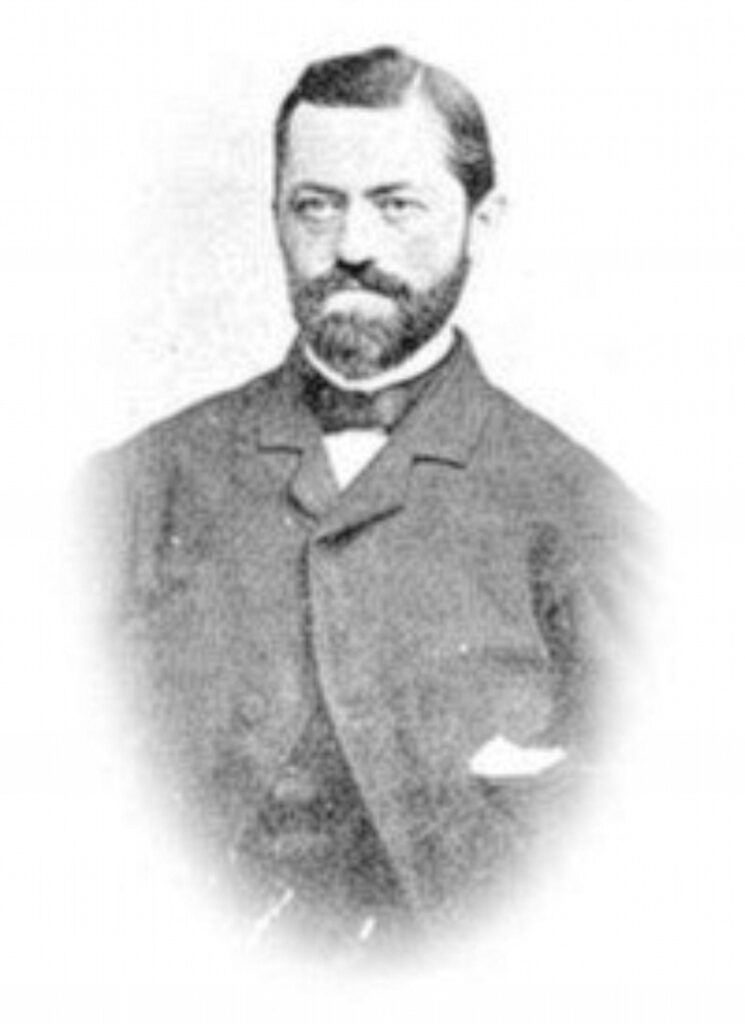
The great Fincke, one of the most brilliant minds of his time.
Read before the Homeopathic Union on 19 April 1894. *The Organon*, vol. 14.
Translated by Edouard Broussalian, 2016; revised in 2018.
[Allopathic barbarism initially turned its attention to animals, exploiting them in the most despicable manner imaginable, under the guise of ‘science’, whilst reaping its first major profits. A few years later, the coal barons (Carnegie) and oil magnates (Rockefeller) realised the potential of this approach to generate ever more colossal profits, whilst inflicting ever greater harm on nature. A century later, this mad rush continues to hand ever greater power to a small clique of neurotic individuals wielding unlimited authority. Like Cronus devouring his own children: it is now the turn of humans themselves to become a source of organs for transplantation. Indeed, the exact image of today’s society as a whole fits even better with the description of the insatiable appetite ofErysichton, as so aptly described by Anselm Japp in his classic *The Autophagic Society*.
Yet true medicine cannot be anything other than ecological, in the sense that it takes into account not only the perfect integration of humankind with its environment, but also the deepest respect for all forms of life. What a lesson homeopathy teaches us through its experiments on human volunteers, which allow the whole of Creation to benefit from these explorations. Our medicine will continue to provoke ever-greater hatred from the old school as the latter soon reaches its limits. But the real reason for the conflict cannot be explained solely by a glaring difference in clinical results. The problem stems from the fact that, every day, we demonstrate to the world that we are closest to Nature, which gives everything in abundance, without reserve, and entirely freely. EB.]
When Koch brought his case to the fore, he came dangerously close to homeopathy by using theisopathy for his experiments. He injected the raw toxin produced by a disease into the body in order to cure that very same disease. German homeopaths were quick to denounce this practice and forced the allopaths to withdraw their plagiarised work. They then demonstrated experimentally, through clinical cases, that if the substance produced by the disease was potentised, it proved not to be fatal, as it had been in Koch’s hands, but rather curative.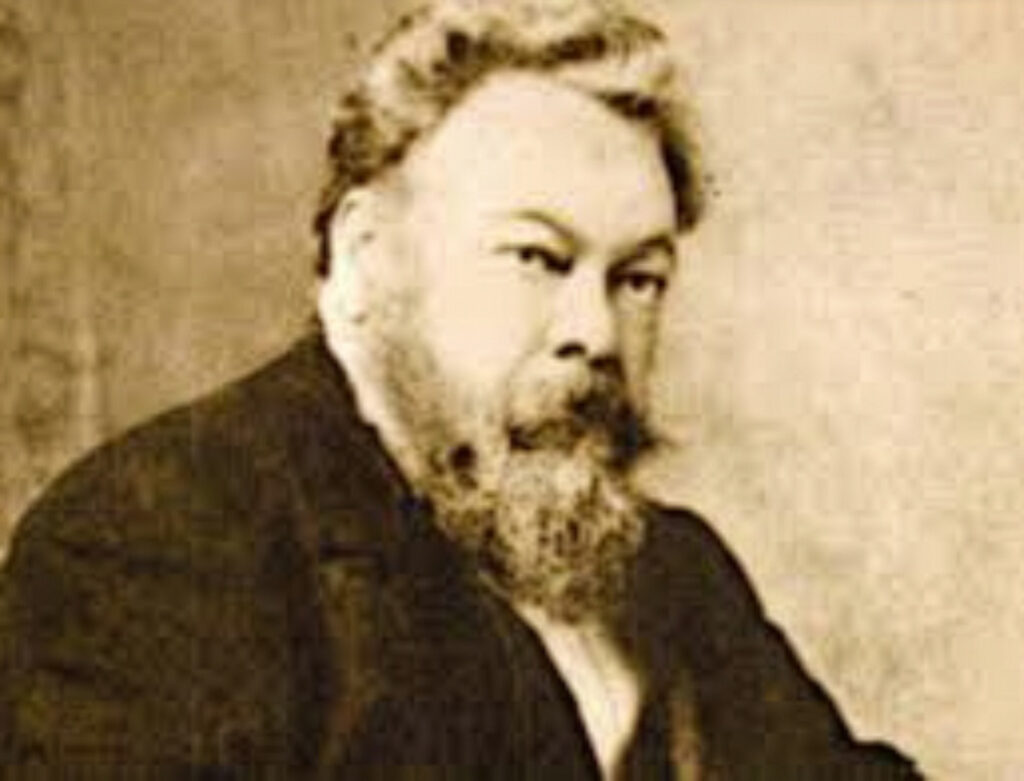
Burnett followed suit by using the 100 in his clinical casese one hundredth. Nowadays, the only medical evidence allopathic doctors cite in support of their compulsory vaccination is based on obscure and dubious statistics from this century and the last, and on the categorical assertion that vaccination protects against and mitigates smallpox. But the statistics of which we are aware, and those we have gathered from the cases we encounter every day around us, are clear and reliable and cannot be contradicted. Our observations show that vaccination and revaccination have no effect on smallpox and that they frequently cause incalculable harm. Prejudice, a long-standing habit of the people, together with their fear of a loathsome disease, are the other main pillars of support for the ‘pro-vaccination advocates’. The political doctor leaps over the obstacle in his own way, like a barometer, with no scientific principle to guide his actions, and millions of sheep leap after him. But men should not be sheep! And doctors should not be wolves in sheep’s clothing!
Now, this smallpox, which has ravaged humanity across the globe for thousands of years, certainly did not wait for the little Health Commissioner who, by implementing his aid programme without due process, is coercing the public under the pretext of eradication. They cannot even achieve eradication in communities as small as a house or a refuge on an island. All the inhabitants – that is to say, a few hundred people – were vaccinated and revaccinated four or five months ago [0] And here is the result! Smallpox breaks out and the public health eradication campaign begins anew, with the animal poison – of unknown composition – being injected into the arms and legs of the unfortunate souls confined to their island.[1] ‘Blind disbelief is bound to be wrong.’[2]
If these men, in their arrogance and ignorance, attempt to forcibly impose their own odious and despotic measures on a community as vast and enlightened as that which resides in the free republic of the United, did not disregard the immutable law of medicinal action proclaimed by the great Hahnemann, and had adopted both his scientific principles and his humanism as guiding principles in the prevention and cure of diseases, as well as in the pursuit of a healthy lifestyle, they would look upon these present ramblings in the service of ignorance and profit with the remorse of a soul driven to despair by its misdeeds on the threshold of the afterlife.
Yet it is a well-established fact that the ancient Eastern nations tried, against smallpox, the very same principle that Koch revived against tuberculosis, even though it was known from their experience that it did not work. They inoculated people with the very lymph from the smallpox they were seeking to prevent and eradicate. But alas, Hahnemann’s principle, as old as the world itself, was as little understood at that time as it is today, with the exception of a very small minority.
By inoculating smallpox virus into the body of a healthy person, that person was more certain to be infected than if they were simply exposed to sick people from a distance or even through direct contact. This is because the strength of the vital force required to ward off the infection during inoculation is insufficient when the raw toxic substance is introduced into the body through a break in the skin. This is nothing other than poisoning and produces its natural effects, namely smallpox in the form of the disease. The same applies to Koch’s prophylaxis using tuberculin, as many have died a painful death whereas they would have survived for a shorter or longer period without it.
It is very strange to find that this age-old homeopathic principle is still viewed in exactly the same way by the majority of the homeopathic profession today. Such is the slowness of the Lord’s mills: even fifty years after Hahnemann’s death, and sixty years after the publication of the latest edition of his Organon, his principle of Similia Similibus is still not understood, let alone accepted, by our contemporaries, with the exception of a very small minority. Like the ancient Tatars and Chinese, they recognise the ‘simile’, but not the minimal dose that allows the ‘simile’ to be used for experimentation and healing. This explains why, with perhaps a few exceptions, they follow the example of this very same ‘vaccine barometer’, and are not so different from the profession they ostensibly abhor.
In no way does it become clear to them that, as illustrated by the example of smallpox, the partial acceptance of the homeopathic principle is immeasurably disastrous. It is also strange that this very same principle was imported from the Far East to the West with the same fanaticism and despotism found in the decrees of the Health Councils of the time. It spread throughout Europe from England, causing unspeakable suffering and many deaths, until the arrival of Jenner, who, seemingly unwittingly, applied this same homeopathic principle, but by substituting the poison of smallpox with that of cowpox.
It was, in fact, a repetition of the same revealing experiment that had originally led to smallpox inoculation in the East, and was even closer to homeopathy, because the cowpox pustule appears only on the cow’s udder and merely resembles the smallpox pustule. However, Jenner introduced his vaccination after Hahnemann had discovered the homeopathic law, of which he most likely had no idea in his early days, and as far as we know, he paid no heed to it thereafter. However, ‘raw’ cowpox caused such severe side effects that it was abandoned in favour of a new method of inoculation: humanised cowpox [see ADDENDUM].
The pustule produced by this modified cowpox virus [through interhuman inoculation] was indeed similar to a smallpox pustule, and yet no one considered the underlying homeopathic principle. However, over time, and particularly thanks to the influence of the homeopathic school, it was realised that the humanised vaccine also transmitted germs[3] disease arising from latent miasms within the bodies of vaccinated children, as Hahnemann teaches, which are capable of producing all manner of pathological conditions, fatal in many cases.
Consequently, this more humane method of vaccination was similarly abandoned, leading to a new approach which can no longer be called vaccination, but is simply an infection, an attempt to induce sepsis, carried out by introducing a virus into broken skin, with the aim of creating a rash that is supposed to protect against smallpox. This virus is produced in specialised stables, where young animals, such as heifers, calves and even oxen, bulls and dairy cows are inoculated with the virus, which originated in a cow that had spontaneously contracted cowpox many years earlier, and has since been passed from one animal to another over many generations.
At least, that is what is claimed by those who manufacture and sell the supposedly pure bovine or animal virus. At the same time, they dispute the purity of other types of virus manufactured by competitors for various reasons. No one knows which virus can actually be used in practice, and no one seems to care. Thus, the smallpox virus has been inoculated into young cattle, or horse fat, and this inoculation has been repeated from one animal to another in an endless succession. The high level of protection currently claimed by the ‘virulators’ is therefore nothing more than the inoculation of this poisonous substance. Whether there really is any similarity whatsoever between smallpox pustules and those produced in animals is, to say the least, not asserted by the ‘virulators’, and this substance is certainly no more effective at preventing smallpox than previous methods of inoculation, whilst causing all manner of illnesses, not to mention that it makes many people more susceptible to smallpox infection during an epidemic.[4]
 Hahnemann himself does not appear to have been particularly opposed to vaccination, and although he cites it as confirmation of his principle, he was by no means enamoured of it. For he had already mentioned (Organon, § 46) that ‘in the lymph of the inoculated cow, in addition to the protective anti-smallpox element, there exists a substance that causes a generalised dermatosis of a different nature, consisting of pointed (pimples) that are generally small and non-suppurative, surrounded by an erythematous areola, often dotted with small, round red macules, a dermatosis quite often accompanied by intense pruritus’, which clearly indicates a psoric miasm inherent in the cow. Jenner was well aware that this cowpox lymph produced effects that were too severe, and he abandoned the idea of transferring it to human subjects in favour of arm-to-arm vaccination.
Now, what is remarkable is that the inoculation practised in ancient times continues to this day, based, as we have just seen, on a homeopathic principle – Similia Similibus – that is only half-understood and which amounts to nothing other than the doctrine of theIsopathie widely condemned. Thus, both the ancient Asians and modern Europeans are alike in this respect, being themselves guilty of this pernicious doctrine when, for the purpose of protection against or cure of a disease, they administer to the individual, by inoculation, the raw substance produced by the disease itself. The Chinese inoculated smallpox lymph to prevent the spread of smallpox. Europeans inoculated tuberculous matter to prevent or cure tuberculosis in humans and animals. This practice is nothing other than pure and absolute isopathy, but of a kind that the benevolent gentleman who first spoke of isopathy, Dr Lux, never advocated or practised. He wished for pathological products to be tested and applied in a highly potentised form. In this sense, he merely helped to bring to fruition an idea put forward by Hering as early as 1830 (Archiv X, 2, p. 24): ‘Every case of smallpox, every contagious disease, would also contain within it the means to produce a preventive remedy; epidemics, as soon as they broke out, could be immediately nipped in the bud, and the first patient would serve to cure all those who followed. The plague and anthrax would lose their terror, and whatever monstrous disease the East might bring us in the future would carry its own remedies with it.”
Hahnemann himself, on the final page of *Chronic Diseases*, endorsed the administration of nosodes in a dynamic format. This should put an end to any objections from those who still refuse to use them, however experienced they may be lege artis and are therefore prescribed on the basis of observed guiding symptoms, which makes the use of these substances just as safe as any other remedy in the Materia Medica Pura. These colleagues provide a curious example of inconsistency when they vaccinate with a poison that lacks any pure pedigree whatsoever[5] to protect against smallpox. It is impossible to say what scientific principle they are based on. Just as in the allopathic school, once they have finished their display of boasting and scientific gibberish to justify their point of view, they must fall back on the good old attitude of medicine, which is declared not to be an exact science but merely empirical knowledge derived from experience. In that case, they must resign from their positions as Hahnemannian homeopaths, since they are adopting the shortcomings of the allopathic school.
Hahnemann presents us with a universal natural law upon which medicine is founded, and affirms its nature as an exact science which cannot exist without well-known fundamental laws. Whilst scientists in this branch of general science are not always able to save lives in accordance with their method, which is based on laws and principles, we must not forget that life is sustained by Almighty God and Him alone, and that it is supported by human instruments only to the extent that powers are conferred upon man for this purpose.
A Health Council empowered by a state government – something we are seeing for the first time in this great republic – which endangers life, liberty and property by employing a flawed and half-understood homeopathic law, has nothing to do with the divine grace bestowed upon mankind to become the instruments that implement the benevolent law given to the world by Hahnemann, namely that like is cured by like, and not by the identical. If, therefore, one is to be able to prevent or avert a disease such as smallpox, this can only be conceived within the framework of that very same law, that is to say, the simillimum administered in a highly potentised form, this simillimum being nothing other than the lymph of smallpox itself in a highly potentised state.
 There is no need to force all of creation to be inoculated with one poison or another. The materialistic notion that has taken hold of the allopathic mindset, generation after generation, drives them to inject or administer medicinal agents through a breach in the skin, forcibly penetrating the fine nerve endings, blood vessels and other components of the dermis. In more ways than one, this represents a testimony of poverty [6] for the old school. As for allopathic doctors, they have yet to realise that:
- in every substance there lies a medicinal force capable of exerting its own influence on the living organism, which cannot be confused with the mere physical and chemical forces simultaneously present within it;
- and this medicinal potency can be obtained from the raw substance through the process of potentisation, so that when applied to the tongue, it penetrates the entire body in accordance with its quality.[7]
They imitate the rabid dog, the snake and the Gila monster, all of which must bite in order to inject their poison into the body — that is to say, to spread it throughout its most vital parts. Poison and the scalpel are the pride of the allopathic school, which in this field has surpassed the heights that no one had reached in previous centuries. It is the contrast in their treatments that best illustrates this: poisoning is still the norm; their dosages are limited to the maximum tolerable level so as not to endanger life, and yet all too often the result is the opposite effect.
‘The heart has given out,’ alas! all too often as a result of the effects of palliative medication prescribed to relieve pain or induce sleep. This sort of administration of poisons by injection for the purposes of prevention or treatment is a disgrace to a civilised nation at the end of this century, and reduces the free people of this country to a new form of slavery worse than anything that has ever existed. No one will be free any longer if the Health Council, by virtue of an unconstitutional law, can seize you on pain of forfeiting your life, your liberty or your property, for the purpose of inoculating you with a poison that no sensible person could possibly approve of. You must be vaccinated so that someone 6 km away may be spared the danger of contracting smallpox. It is strange that the allopathic medical profession, which has always ridiculed the infinitesimal on the grounds of impossibility, now compels everyone to submit to its authority, sanctioned by law, on the grounds of possibility.
Has the allopathic medical profession gone mad to demand such extravagant power over a civilised nation? Has the old adage ‘Whom the gods wish to destroy, they first drive mad’ come true?[8]
If we do not oppose it in time, compulsory vaccination will result in the suppression of the privileges and rights not only of all citizens, but also of a doctor who has been properly trained and is authorised to practise; this will spell the end of homeopathy. It is here that the oft-cited slogan regarding ‘freedom of opinion and medical practice’ finds its place for the majority of our profession, in order to defend it against the encroachment of the allopathic profession through the actions of its politically-minded doctors.
I do not have time to emphasise the danger to all those people whose natural fear of contagion and infection is now being exploited to erode and completely destroy the natural, inalienable rights enshrined in the Declaration of Independence and the Constitution of the United States.
For the time being, it would be enough to find a way to repeal the unconstitutional law on compulsory vaccination as soon as possible, and to ensure that it does not find its way into New York State’s new Constitution at the convention to be held shortly.
BROOKLYN, 19 April 1894.
[ADDENDUM] : an overview of vaccination methods, based on a Wikipedia article from April 2016.
As natural cases of cowpox are rare, it was discovered that the vaccine could be ‘transmitted’ to humans and reproduced and spread from person to person. In his original method, Jenner used lymph from a cowpox pustule developed by a farm worker for subsequent vaccinations carried out ‘from arm to arm’. As this transfer of human fluids led to a number of complications, a safer method of producing vaccine was introduced in Italy. The new method used cows to produce the vaccine via a process known as ‘retrovaccination’, in which the humanised cowpox virus was inoculated into a heifer so that it could be passed from calf to calf, yielding massive quantities. This in turn led to a new variant, ‘true animal vaccine’, which used the same process but started with the natural smallpox virus rather than the humanised form.
This production method soon proved to be highly lucrative, and many entrepreneurs seized the opportunity, as all that was needed to produce crude versions of the vaccine was calves and the ‘mother’ lymph from an infected cow. W. F. Elgin of the National Vaccine Establishment presented his slightly refined technique at the Conference of State and Provincial Boards of Health of North America.
A three-month-old calf is used, secured to an operating table. Incisions are made in the lower part of its body, into which glycerine-based lymph from a previously inoculated calf is injected. After a few days, the incisions are covered with scabs, which are softened using sterilised water mixed with glycerine, which also disinfects them. They are stored in hermetically sealed capillary tubes. At a certain point, the virus used was no longer that of cowpox but a derivative, which might be termed ‘vaccinin’. Scientists have not determined exactly when the change or mutation occurred, but the effects of vaccinine and the cowpox virus as a vaccine are almost identical.
[0] Fincke is no doubt referring to the terrible epidemic that ravaged the island of Bantayan in the Philippines, where the death toll continued to rise as vaccination rates increased, whilst the island of Mindanao – where the inhabitants had refused to be vaccinated – was spared. There is a complete news blackout on this; you won’t find a thing on Google. Only Fernand Delarue, in his book *Intoxication vaccinale*, raises the issue in French. He even allowed to state that vaccination delayed the eradication of smallpox by causing outbreaks to occur at a time when the disease was on the wane or even non-existent, as in the Philippines and the Faroe Islands
[1] “Eradication campaigns relying entirely or primarily on mass vaccination were successful in a few countries but failed in most cases.” Official WHO report, 1980.
[2] ‘Blind unbelief is sure to err and scan his work in vain’. William Cowper; God moves in a mysterious way ; 1774; in *1006 Hymns*.
[3] The word ‘germ’ is used here in a dual sense: it refers both to microbial or viral contamination and to a dynamic process – that is to say, an energy potential – which may subsequently develop into a fully-fledged chronic illness.
[4] In 1905, the United States took possession of the Faroe Islands. Before the US took possession of them, the smallpox mortality rate stood at 10 per cent. Between 1905 and 1906, following a mass vaccination campaign, an epidemic claimed the lives of 25 per cent of the population. Between 1918 and 1920, in the Philippines, the US military forced 95 % the population to be vaccinated against smallpox. There was a terrible epidemic with 60,000 deaths, affecting 54 per cent of the population. The capital, Manila – where almost the entire population had been vaccinated – was the hardest hit (65.3 per cent). At the same time, the inhabitants of the island of Mindanao – whose population had refused to be vaccinated – were affected by smallpox at a rate of only 11.4 per cent, which was roughly the same mortality rate observed before the arrival of the United States. Fernand DELARUE, *Vaccine Poisoning*, published by LE SEUIL, 1977.
[5] Fincke’s choice of wording is the height of refinement, enabling him to kill two birds with one stone. He condemns the introduction of products of unknown composition and origin…
[6] Literally ‘a certificate of poverty’; by extension, proof of the dishonour of the person bearing this mark of infamy.
[7] Fincke’s statement could be discussed at length, which would go beyond the scope of this article. I shall simply refer to Organon 269.— Homeopathic medicine has developed, for its specific purposes, a completely novel process – one that had never been tried before – which extracts and releases the intangible medicinal properties inherent in raw substances. It is only through this process that these substances acquire medicinal properties and an immeasurably profound efficacy, even those which, in their raw state, show not the slightest sign of medicinal action on the human body.
This remarkable transformation of the qualities of natural substances brings to the fore latent dynamic powers which, until now, had gone unnoticed, as if they were lying dormant in a potential state, yet capable of influencing the vital force and altering the well-being of animal life. This process is known as dynamisation or ‘potentialisation’ (the development of medicinal potency), and its products are dynamisations or potencies obtained at various degrees.
[8] Since we’re using Latinised spellings: Those whom Jupiter wishes to destroy, he first drives mad.