
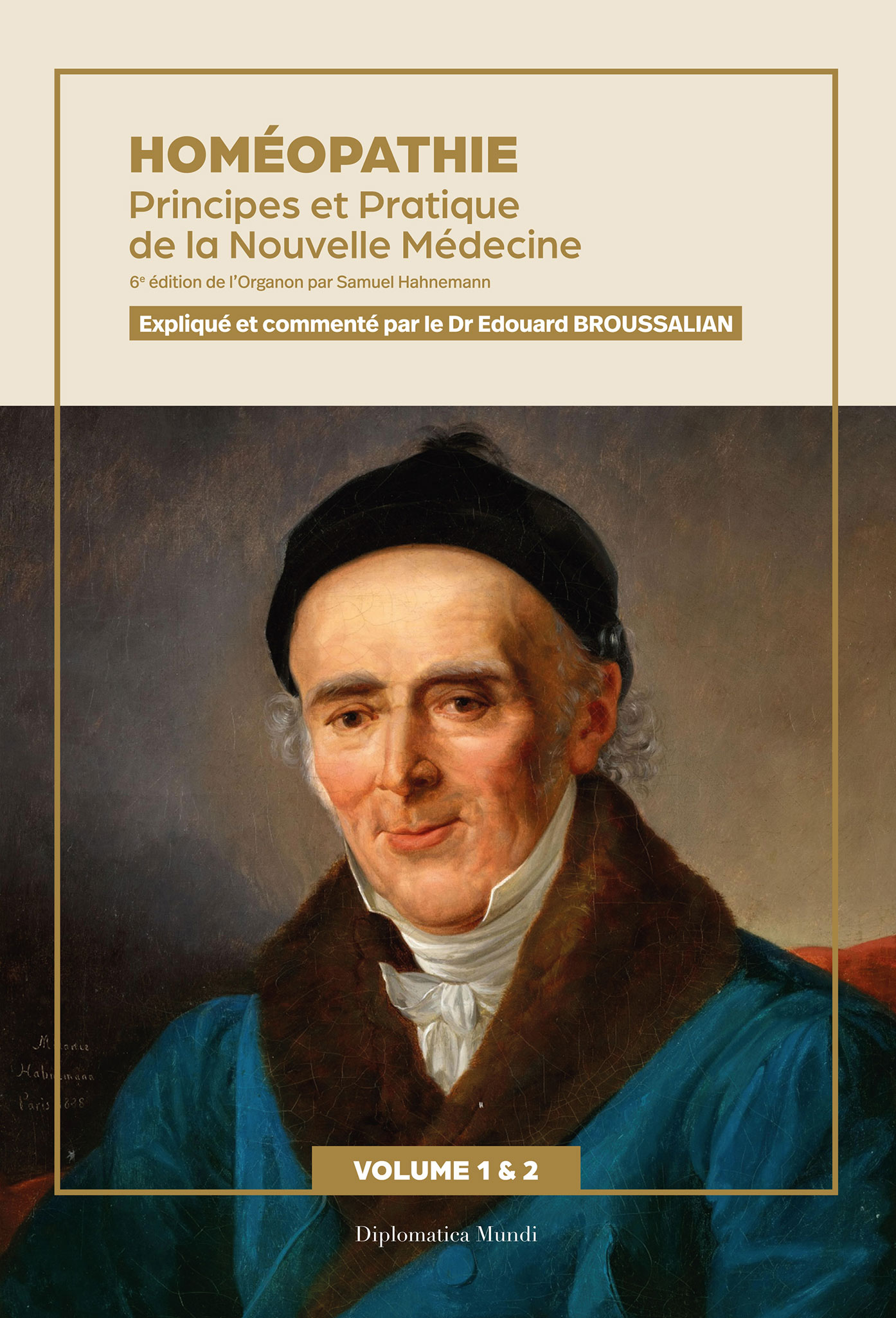
Homeopathy – Principles and Practice of New Medicine, Volumes 1 & 2 – Dr Edouard Broussalian
CHF 195.00
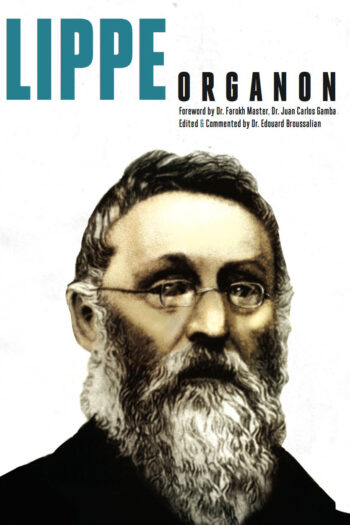
In this new 2025 edition, Dr Édouard Broussalian has re-translated and annotated, in two volumes, the two hundred and ninety-one aphorisms of the sixth edition of the Organon, a work written by the renowned Samuel Hahnemann, the founder of homeopathy.
35 in stock
Description
In this new 2025 edition, Dr Edouard Broussalian has re-translated and annotated, in two volumes, the two hundred and ninety-one aphorisms from the sixth edition of theOrganon, a book written by the famous Samuel Hahnemann, the founder of homeopathy.
The Organon of the Art of Healing is intended, true to its etymology, to be a tool for all homeopaths. This illuminating yet unloved working tool has been neglected by generations of practitioners since its first edition in 1810. Yet Hahnemann never ceased to revise and refine it, right up to the sixth posthumous edition published in 1920. Hahnemann was a scientist of the Age of Enlightenment, possessing an incredible literary and scientific erudition, convinced that medicine was founded on scientific principles and that it needed to be reformed. Drawing on meticulous observations repeated time and again throughout his life, he made it possible to apply the law of similars through a set of coherent theorems governing therapeutic prescription. To summarise, without knowledge of the Organon, there can be no lasting success in homeopathic prescribing nor the cure of acute and chronic diseases. Examination of the patient, miasms, pathogenesis, dissimilar diseases, …: all the fundamental concepts are set out therein with the founder’s characteristic rigour and conciseness.
Volume 1 contains the paragraphs 1 to 70 of the Organon: fundamental theoretical principles which form the first part of this educational adaptation. By bringing the text up to date and explaining its historical context through commentary and the addition of practical and clinical notes, this book aims to help all lovers of homeopathy rediscover this marvellous text, which has not aged a day!
Having set out the General Principles of the New Medicine in Volume One, Hahnemann goes on to explain, in paragraphs 71 to 291, the practice of medicine by setting out three areas of development:
1. Establishment of pathological criteria
2. Therapeutic study of medicines
3. Therapeutic use of medicines and personalised treatment,
This is nothing more and nothing less than the practice of medicine as a doctor ought to practise it.
We are not talking here about the scientific subjects one should have a grounding in, such as immunology, pathology, histology, etc. Here, we are focusing on the essentials: diagnosis and treatment.
No observant doctor can fail to notice that, unfortunately, the conventional diagnoses we were taught are becoming increasingly difficult to make, and that they are, as it were, being replaced by syndromes that are less and less comprehensible, with clinical pictures that are as vague as they are diffuse. This is, of course, one of the signs of the deterioration in the population’s state of health.
Doctors must have studied these various diseases and their associated signs and symptoms. However, the ideal – and indeed our duty – is to keep ourselves constantly up to date with the latest developments in this field.
Additional information
| Weight | 2.400 kg |
|---|---|
| Dimensions | 24.7 × 17.7 × 8.6 cm |
| Pages | 1,230 pp. (Volume 1: 286 pp.; Volume 2: 944 pp.) |